بِسْمِ اللہِ الرَّحْمٰنِ الرَّحِیْمِ
عورت پر خاوند کا حق (احادیث کی روشنی میں)
-
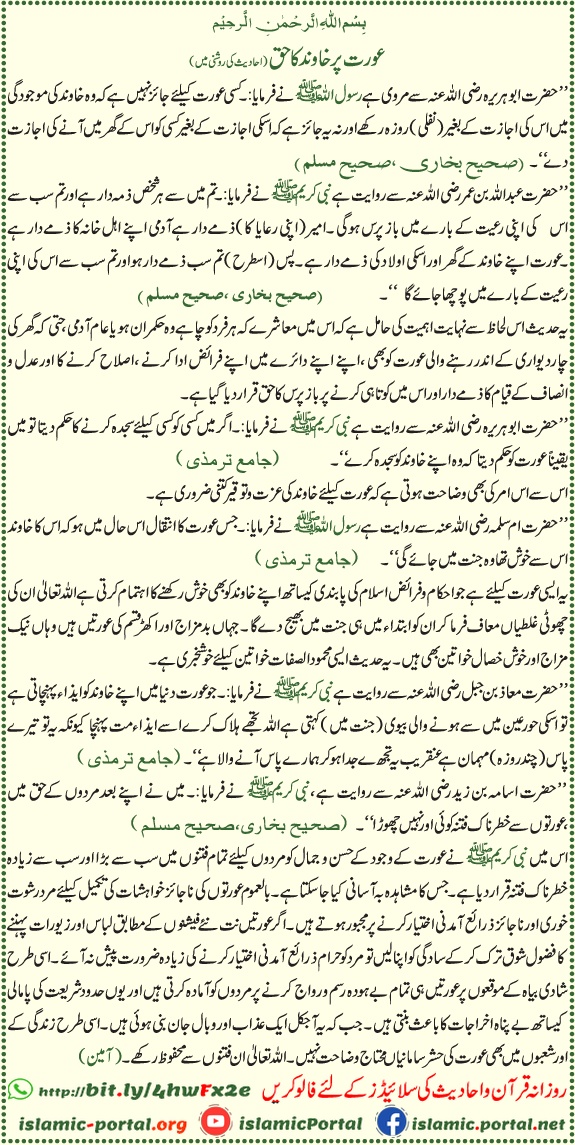
”حضرت ابوہریرہ رضی اللہ عنہ سے مروی ہے کہ رسول اللہ ﷺ نے فرمایا: کسی عورت کیلئے جائز نہیں ہے کہ وہ خاوند کی موجودگی میں اس کی اجازت کے بغیر (نفلی) روزہ رکھے اور نہ یہ جائز ہے کہ اسکی اجازت کے بغیر کسی کو اس کے گھر میں آنے کی اجازت دے“۔ (صحیح بخاری ، صحیح مسلم)
-
”حضرت عبداللہ بن عمر رضی اللہ عنہ سے روایت ہے نبی کریم ﷺ نے فرمایا:۔ تم میں سے ہر شخص ذمہ دار ہے اور تم سب سے اس کی اپنی رعیت کے بارے میں باز پرس ہوگی۔ امیر (اپنی رعایا کا) ذمہ دار ہے آدمی اپنے اہل خانہ کا ذمہ دار ہے۔ عورت اپنے خاوند کے گھر اور اسکی اولاد کی ذمہ دار ہے۔ پس (اسطرح) تم سب ذمہ دار ہو اور تم سب سے اس کی اپنی رعیت کے بارے میں پوچھا جائے گا “۔ (صحیح بخاری ، صحیح مسلم)
یہ حدیث اس لحاظ سے نہایت اہمیت کی حامل ہے کہ اس میں معاشرے کہ ہر فرد کو چاہے وہ حکمران ہو یا عام آدمی، حتی کہ گھر کی چار دیواری کے اندر رہنے والی عورت کو بھی، اپنے اپنے دائرے میں اپنے فرائض ادا کرنے، اصلاح کرنے کا اور عدل و انصاف کے قیام کا ذمہ دار اور اس میں کوتاہی کرنے پر باز پرس کا حق قرار دیا گیا ہے۔
اس سے اس امر کی بھی وضاحت ہوتی ہے کہ عورت کیلئے خاوند کی عزت و توقیر کتنی ضروری ہے۔
یہ ایسی عورت کیلئے ہے جو احکام و فرائض اسلام کی پابندی کیساتھ اپنے خاوند کو بھی خوش رکھنے کا اہتمام کرتی ہے اللہ تعالیٰ ان کی چھوٹی غلطیاں معاف فرما کر ان کو ابتداء میں ہی جنت میں بھیج دے گا۔ جہاں بد مزاج اور اکھڑ قسم کی عورتیں ہیں وہاں نیک مزاج اور خوش خصال خواتین بھی ہیں۔ یہ حدیث ایسی محمودالصفات خواتین کیلئے خوشخبری ہے۔
-
”حضرت معاذ بن جبل رضی اللہ عنہ سے روایت ہے نبی کریم ﷺ نے فرمایا:۔ جو عورت دنیا میں اپنے خاوند کو ایذاء پہنچاتی ہے تو اسکی حورعین میں سے ہونے والی بیوی (جنت میں) کہتی ہے اللہ تجھے ہلاک کرے اسے ایذاء مت پہنچا کیونکہ یہ تو تیرے پاس (چند روزہ) مہمان ہے عنقریب یہ تجھ سے جدا ہو کر ہمارے پاس آنے والا ہے“۔ (جامع ترمذی)
-
”حضرت اسامہ بن زید رضی اللہ عنہ سے روایت ہے، نبی کریم ﷺ نے فرمایا:۔ میں نے اپنے بعد مردوں کے حق میں عورتوں سے خطرناک فتنہ کوئی اور نہیں چھوڑا“۔ (صحیح بخاری، صحیح مسلم)
اس میں نبی کریم ﷺ نے عورت کے وجود کے حسن و جمال کو مردوں کیلئے تمام فتنوں میں سب سے بڑا اور سب سے زیادہ خطرناک فتنہ قرار دیا ہے۔ جس کا مشاہدہ بہ آسانی کیا جا سکتا ہے۔ بالعموم عورتوں کی ناجائز خواہشات کی تکمیل کیلئے مرد رشوت خوری اور ناجائز ذرائع آمدنی اختیار کرنے پر مجبور ہوتے ہیں۔ اگر عورتیں نت نئے فیشوں کے مطابق لباس اور زیورات پہننے کا فضول شوق ترک کر کے سادگی کو اپنالیں تو مرد کو حرام ذرائع آمدنی اختیار کرنے کی زیادہ ضرورت پیش نہ آئے۔ اسی طرح شادی بیاہ کے موقعوں پر عورتیں ہی تمام بے ہودہ رسم و رواج کرنے پر مردوں کو آمادہ کرتی ہیں اور یوں حدود شریعت کی پامالی کیساتھ بے پناہ اخراجات کا باعث بنتی ہیں۔ جب کہ یہ آجکل ایک عذاب اور وبال جان بنی ہوئی ہیں۔ اسی طرح زندگی کے اور شعبوں میں بھی عورت کی حشر سامانیاں محتاج وضاحت نہیں۔ اللہ تعالیٰ ان فتنوں سے محفوظ رکھے۔ (آمین)
English Translation
In the name of Allah, the Most Gracious, the Most Merciful
Husband’s Rights over the Wife (In the Light of Hadith)
“Hazrat Abu Hurairah رضي الله عنه reported that the Messenger of Allah ﷺ said: It is not permissible for a woman to observe a voluntary fast while her husband is present without his permission, nor is it permissible for her to allow anyone to enter his house without his permission.” (Sahih al-Bukhari, Sahih Muslim)
“Hazrat ‘Abdullah ibn ‘Umar رضي الله عنه reported that the Prophet ﷺ said: Each of you is a shepherd, and each of you will be questioned regarding his flock. A ruler is responsible for his subjects; a man is responsible for his household; and a woman is responsible for her husband’s house and his children. Thus, each of you is responsible, and each of you will be questioned regarding his flock.” (Sahih al-Bukhari, Sahih Muslim)
This Hadith holds great significance in that it establishes every individual in society—whether ruler or common person, and even a woman within the confines of her home—as responsible for fulfilling duties within their respective spheres, for reform, and for the establishment of justice and fairness, and accountable for any negligence therein.
“Hazrat Abu Hurairah رضي الله عنه reported that the Prophet ﷺ said: If I were to command anyone to prostrate before another, I would certainly have commanded a woman to prostrate before her husband.” (Jami‘ al-Tirmidhi)
This also clarifies how essential it is for a woman to show respect and honor toward her husband.
“Hazrat Umm Salamah رضي الله عنها reported that the Messenger of Allah ﷺ said: Any woman who dies while her husband is pleased with her will enter Jannah (Paradise).” (Jami‘ al-Tirmidhi)
This applies to a woman who, along with observing the commands and obligations of Islam, strives to keep her husband pleased. Allah Ta‘ala may forgive her minor shortcomings and admit her into Jannah from the very beginning. Just as there are ill-tempered and harsh women, there are also virtuous and well-mannered women; this Hadith is glad tidings for such praiseworthy women.
“Hazrat Mu‘adh ibn Jabal رضي الله عنه reported that the Prophet ﷺ said: When a woman harms her husband in this world, his wife from among the Hoor al-‘Ayn (maidens of Paradise) says: May Allah destroy you! Do not harm him, for he is only a guest with you for a short time; soon he will part from you and come to us.” (Jami‘ al-Tirmidhi)
“Hazrat Usamah ibn Zayd رضي الله عنه reported that the Prophet ﷺ said: I have not left after me any trial more harmful to men than women.” (Sahih al-Bukhari, Sahih Muslim)
In this Hadith, the Prophet ﷺ indicated that the beauty and attraction of women can become one of the greatest trials for men. This can be observed easily. Often, in order to fulfill unlawful desires, men are driven toward bribery and illegitimate sources of income. If women abandon unnecessary attachment to ever-changing fashions, extravagant clothing, and excessive jewelry, and instead adopt simplicity, men would be less inclined toward unlawful earnings.
Similarly, during weddings and social functions, many improper customs are promoted, leading to violations of the limits of Shari‘ah and excessive expenditure—matters that have become a serious burden in present times. The same tendency is evident in other areas of life as well. May Allah Ta‘ala protect us from such trials. (Ameen)