
عورتوں کے حقوق

اشاعت: 17-02-2026
شیئر کریں (صدقہ جاریہ):
rights of women in islam hadith ki roshni mein shohar biwi ke huqooq

بِسْمِ اللہِ الرَّحْمٰنِ الرَّحِیْمِ

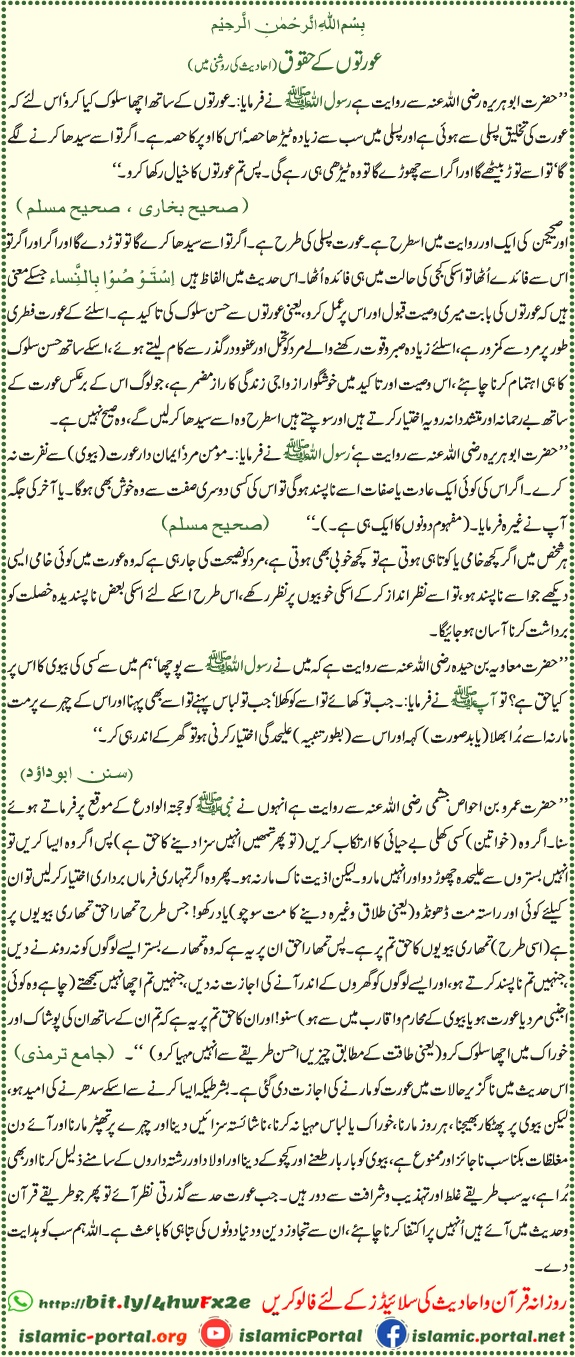
عورتوں کے حقوق (احادیث کی روشنی میں)

  • ”حضرت ابوہریرہ رضی اللہ عنہ سے روایت ہے رسول اللہ نے فرمایا: عورتوں کے ساتھ اچھا سلوک کیا کرو اس لئے کہ عورت کی تخلیق پسلی سے ہوئی ہے اور پسلی میں سب سے زیادہ ٹیڑھا حصہ اس کا اوپر کا حصہ ہے۔ اگر تو اسے سیدھا کرنے لگے گا تو اسے توڑ بیٹھے گا اور اگر اسے چھوڑے گا تو وہ ٹیڑھی ہی رہے گی۔ پس تم عورتوں کا خیال رکھا کرو“۔ (صحیح بخاری ، صحیح مسلم)

اور صحیحین کی ایک اور روایت میں اسطرح ہے۔ عورت پسلی کی طرح ہے۔ اگر تو اسے سیدھا کرے گا تو توڑ دے گا اور اگر اور اگر تو اس سے فائدہ اٹھا تو اسکی کجی کی حالت میں ہی فائدہ اٹھا۔ اس حدیث میں الفاظ ہیں اِسْتَوْصُوا بِالنِّسَاءِ جسکے معنی ہیں کہ عورتوں کی بابت میری وصیت قبول اور اس پر عمل کرو، یعنی عورتوں سے حسن سلوک کی تاکید ہے۔ اسلئے کے عورت فطری طور پر مرد سے کمزور ہے، اسلئے زیادہ صبر و قوت رکھنے والے مرد کو تحمل اور عفو و درگزر سے کام لیتے ہوئے، اسکے ساتھ حسن سلوک کا ہی اہتمام کرنا چاہئے، اس وصیت اور تاکید میں خوشگوار ازدواجی زندگی کا راز مضمر ہے، جو لوگ اس کے برعکس عورت کے ساتھ بے رحمانہ اور متشددانہ رویہ اختیار کرتے ہیں اور سوچتے ہیں اسطرح وہ اسے سیدھا کرلیں گے، وہ صحیح نہیں ہے۔

  • ”حضرت ابوہریرہ رضی اللہ عنہ سے روایت ہے رسول اللہ نے فرمایا:۔ مومن مرد (ایمان دار شوہر) ایمان دار عورت (بیوی) سے نفرت نہ کرے۔ اگر اس کی کوئی ایک عادت یا صفات اسے ناپسند ہوگی تو اس کی کسی دوسری صفت سے وہ خوش بھی ہوگا۔ یا آخر کی جگہ آپ نے غیرہ فرمایا۔ (مفہوم دونوں کا ایک ہی ہے)۔“ (صحیح مسلم)

ہر شخص میں اگر کچھ خامی یا کوتاہی ہوتی ہے تو کچھ خوبی بھی ہوتی ہے، مرد کو نصیحت کی جارہی ہے کہ وہ عورت میں کوئی خامی ایسی دیکھے جو اسے ناپسند ہو، تو اسے نظر انداز کر کے اسکی خوبیوں پر نظر رکھے، اس طرح اسکے لئے اسکی بعض ناپسندیدہ خصلت کو برداشت کرنا آسان ہو جائیگا۔

  • ”حضرت معاویہ بن حیدہ رضی اللہ عنہ سے روایت ہے کہ میں نے رسول اللہ سے پوچھا، ہم میں سے کسی کی بیوی کا اس پر کیا حق ہے؟ تو آپ نے فرمایا:۔ جب تو کھائے تو اسے کو کھلا جب تو لباس پہنے تو اسے بھی پہنا اور اس کے چہرے پر مت مار نہ اسے بُرا بھلا (یا بدصورت) کہہ اور اس سے (بطور تنبیہ) علیحدگی اختیار کرنی ہو تو گھر کے اندر ہی کر“۔ (سنن ابوداؤد)

  • ”حضرت عمرو بن احواص جشمی رضی اللہ عنہ سے روایت ہے انہوں نے نبی کو حجتہ الوادع کے موقع پر فرماتے ہوئے سنا۔ اگر وہ (خواتین) کسی کھلی بے حیائی کا ارتکاب کریں (تو پھر تمھیں انہیں سزا دینے کا حق ہے) پس اگر وہ ایسا کریں تو انہیں بستروں سے علیحدہ چھوڑ دو اور انہیں مارو۔ لیکن اذیت ناک مار نہ ہو۔ پھر وہ اگر تمہاری فرمان برداری اختیار کرلیں تو ان کیلئے کوئی اور راستہ مت ڈھونڈو (یعنی طلاق وغیرہ دینے کا مت سوچو) یاد رکھو! جس طرح تمھارا حق تمھاری بیویوں پر ہے (اسی طرح) تمھاری بیویوں کا حق تم پر ہے۔ پس تمھارا حق ان پر یہ ہے کہ وہ تمھارے بستر ایسے لوگوں کو نہ روندنے دیں جنہیں تم ناپسند کرتے ہو، اور ایسے لوگوں کو گھروں کے اندر آنے کی اجازت نہ دیں، جنہیں تم اچھا نہیں سمجھتے (چاہے وہ کوئی اجنبی مرد یا عورت ہو یا بیوی کے محارم واقارب میں سے ہو) سنو! اور ان کا حق تم پر یہ ہے کہ تم ان کے ساتھ ان کی پوشاک اور خوراک میں اچھا سلوک کرو (یعنی طاقت کے مطابق چیزیں احسن طریقے سے انہیں مہیا کرو) “۔ (جامع ترمذی)

اس حدیث میں ناگزیر حالات میں عورت کو مارنے کی اجازت دی گئی ہے۔ بشرطیکہ ایسا کرنے سے اسکے سدھرنے کی امید ہو، لیکن بیوی پر پھٹکار بھیجنا، ہر روز مارنا، خوراک یا لباس مہیا نہ کرنا، ناشائستہ سزائیں دینا اور چہرے پر تھپڑ مارنا اور آئے دن مغلظات بکنا سب ناجائز اور ممنوع ہے، بیوی کو بار بار طعنے اور کچوکے دینا اور اولاد اور رشتہ داروں کے سامنے ذلیل کرنا اور بھی بُرا ہے، یہ سب طریقے غلط اور تہذیب و شرافت سے دور ہیں۔ جب عورت حد سے گذرتی نظر آئے تو پھر جو طریقے قرآن و حدیث میں آئے ہیں اُنہیں پر اکتفا کرنا چاہئے، ان سے تجاوز دین و دنیا دونوں کی تباہی کا باعث ہے۔ اللہ ہم سب کو ہدایت دے۔

In the name of Allah, the Most Gracious, the Most Merciful

Rights of Women (In the Light of Hadith)

“Hazrat Abu Hurairah رضي الله عنه reported that the Messenger of Allah said: Treat women kindly, for a woman has been created from a rib, and the most crooked part of the rib is its upper portion. If you try to straighten it, you will break it; and if you leave it, it will remain crooked. So treat women kindly.” (Sahih al-Bukhari, Sahih Muslim)

And in another narration reported in the two Sahih collections, it is stated: A woman is like a rib. If you try to straighten it, you will break it; and if you benefit from it, you will benefit while it remains crooked. In this Hadith, the words اِسْتَوْصُوا بِالنِّسَاءِ appear, which mean: “Accept my advice regarding women and act upon it.” In other words, there is a strong emphasis on showing kindness to women.

This is because a woman is naturally more delicate and vulnerable compared to a man; therefore, a man—who is expected to possess greater patience and strength—should deal with her through tolerance, forgiveness, and good conduct. Within this instruction lies the secret of a harmonious marital life. Those who, contrary to this guidance, adopt harsh and violent behavior toward women thinking that such treatment will ‘straighten’ them are mistaken.

“Hazrat Abu Hurairah رضي الله عنه reported that the Messenger of Allah said: A believing man must not hate a believing woman. If he dislikes one of her traits, he will be pleased with another.” (Sahih Muslim)

Every person possesses certain shortcomings as well as virtues. The man is being advised that if he notices a trait in his wife that he dislikes, he should overlook it and focus on her good qualities. In this way, it becomes easier for him to tolerate what he dislikes.

“Hazrat Mu‘awiyah ibn Haydah رضي الله عنه reported: I asked the Messenger of Allah , ‘What is the right of a wife over her husband?’ He replied: Feed her when you eat, clothe her when you clothe yourself, do not strike her on the face, do not insult or revile her, and if you must separate from her (as a form of discipline), then do so within the house.” (Sunan Abu Dawud)

“Hazrat ‘Amr ibn Ahwas al-Jushami رضي الله عنه reported that he heard the Prophet say during the Farewell Pilgrimage: If they (women) commit open indecency, then you may separate from them in beds and strike them, but not in a harmful manner. If they then obey you, do not seek a way against them. Remember! Just as you have rights over your wives, they also have rights over you. Your right over them is that they should not allow anyone whom you dislike to sit on your bedding, nor allow anyone into your homes whom you do not approve of. And their right over you is that you treat them well regarding their clothing and food.” (Jami‘ al-Tirmidhi)

In this Hadith, permission to strike a woman is mentioned only in unavoidable circumstances—on the condition that there is hope of reform and that it is not harmful. However, cursing one’s wife, beating her regularly, failing to provide food or clothing, imposing humiliating punishments, striking the face, and using abusive language are all unlawful and prohibited.

Likewise, repeatedly taunting her, humiliating her before children or relatives, and degrading her dignity are even worse. All such methods are wrong and contrary to decency and moral conduct. When a woman appears to exceed limits, only those methods prescribed in the Quran and Hadith should be adopted; exceeding them leads to destruction in both religious and worldly matters. May Allah grant guidance to us all.