بِسْمِ اللہِ الرَّحْمٰنِ الرَّحِیْمِ
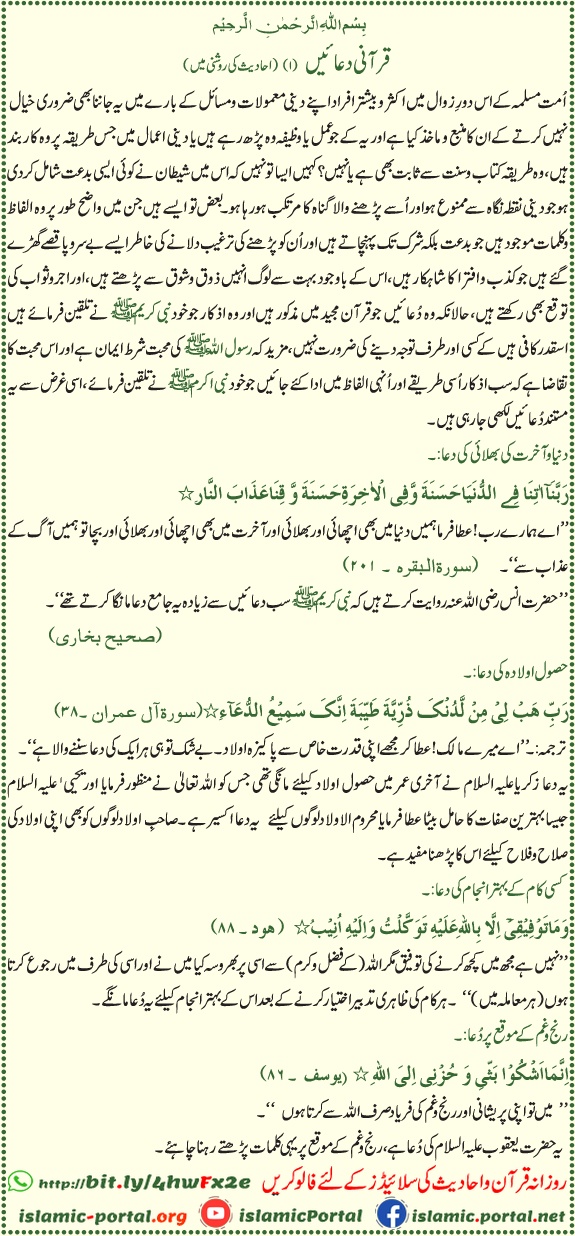
قرآنی دعائیں (۱) (احادیث کی روشنی میں)
اُمت مسلمہ کے اس دورِ زوال میں اکثر و بیشتر افراد اپنے دینی معمولات و مسائل کے بارے میں یہ جاننا بھی ضروری خیال نہیں کرتے کہ ان کا منبع و ماخذ کیا ہے اور یہ کہ جو عمل یا وظیفہ وہ پڑھ رہے ہیں یا دینی اعمال میں جس طریقہ پر وہ کاربند ہیں، وہ طریقہ کتاب و سنت سے ثابت بھی ہے یا نہیں؟ کہیں ایسا تو نہیں کہ اس میں شیطان نے کوئی ایسی بدعت شامل کر دی ہو جو دینی نقطہ نگاہ سے ممنوع ہو اور اُسے پڑھنے والا گناہ کا مرتکب ہو رہا ہو۔ بعض تو ایسے ہیں جن میں واضح طور پر وہ الفاظ و کلمات موجود ہیں جو بدعت بلکہ شرک تک پہنچاتے ہیں اور اُن کو پڑھنے کی ترغیب دلانے کی خاطر ایسے بے سروپا قصے گھڑے گئے ہیں جو کذب و افترا کا شاہکار ہیں، اس کے باوجود بہت سے لوگ انہیں ذوق و شوق سے پڑھتے ہیں، اور اجر و ثواب کی توقع بھی رکھتے ہیں، حالانکہ وہ دُعائیں جو قرآن مجید میں مذکور ہیں اور وہ اذکار جو خود نبی کریم ﷺ نے تلقین فرمائے ہیں اسقدر کافی ہیں کہ کسی اور طرف توجہ دینے کی ضرورت نہیں، مزید کہ رسول اللہ ﷺ کی محبت شرط ایمان ہے اور اس محبت کا تقاضا ہے کہ سب اذکار اُسی طریقے اور اُنہی الفاظ میں ادا کئے جائیں جو خود نبی اکرم ﷺ نے تلقین فرمائے، اسی غرض سے یہ مستند دُعائیں لکھی جا رہی ہیں۔
دنیا و آخرت کی بھلائی کی دعا:-
رَبَّنَا آتِنَا فِي الدُّنْيَا حَسَنَةً وَفِي الْآخِرَةِ حَسَنَةً وَقِنَا عَذَابَ النَّارِ
”اے ہمارے رب! عطا فرما ہمیں دنیا میں بھی اچھائی اور بھلائی اور آخرت میں بھی اچھائی اور بھلائی اور بچا تو ہمیں آگ کے عذاب سے“۔ (سورۃ البقرہ - ۲۰۱)
”حضرت انس رضی اللہ عنہ روایت کرتے ہیں کہ نبی کریم ﷺ سب دعائیں سے زیادہ یہ جامع دعا مانگا کرتے تھے“۔ (صحیح بخاری)
حصول اولاد کی دعا:-
رَبِّ هَبْ لِي مِن لَّدُنكَ ذُرِّيَّةً طَيِّبَةً ۖ إِنَّكَ سَمِيعُ الدُّعَاءِ (سورۃ آل عمران - ۳۸)
ترجمہ:- ”اے میرے مالک! عطا کر مجھے اپنی قدرت خاص سے پاکیزہ اولاد۔ بے شک تو ہی ہر ایک کی دعا سننے والا ہے“۔
یہ دعا زکریا علیہ السلام نے آخری عمر میں حصول اولاد کیلئے مانگی تھی جس کو اللہ تعالیٰ نے منظور فرمایا اور یحییٰ علیہ السلام جیسا بہترین صفات کا حامل بیٹا عطا فرمایا محروم الاولاد لوگوں کیلئے یہ دعا اکسیر ہے۔ صاحب اولاد لوگوں کو بھی اپنی اولاد کی صلاح و فلاح کیلئے اس کا پڑھنا مفید ہے۔
کسی کام کے بہتر انجام کی دعا:-
وَمَا تَوْفِيقِي إِلَّا بِاللَّهِ ۚ عَلَيْهِ تَوَكَّلْتُ وَإِلَيْهِ أُنِيبُ (ھود - ۸۸)
”نہیں ہے مجھ میں کچھ کرنے کی توفیق مگر اللہ (کے فضل و کرم) سے اسی پر بھروسہ کیا میں نے اور اسی کی طرف میں رجوع کرتا ہوں (ہر معاملہ میں)“۔
ہر کام کی ظاہری تدبیر اختیار کرنے کے بعد اس کے بہتر انجام کیلئے یہ دُعا مانگے۔
رنج و غم کے موقع پر دُعا:-
إِنَّمَا أَشْكُو بَثِّي وَحُزْنِي إِلَى اللَّهِ (یوسف - ۸۶)
”میں تو اپنی پریشانی اور رنج و غم کی فریاد صرف اللہ سے کرتا ہوں“۔
یہ حضرت یعقوب علیہ السلام کی دُعا ہے، رنج و غم کے موقع پر یہی کلمات پڑھتے رہنا چاہئے۔
English Translation
In the Name of Allah, the Most Gracious, the Most Merciful
Quranic Supplications (1) (In the Light of Hadith)
In this era of decline within the Muslim Ummah, many individuals no longer consider it necessary to even know the sources and foundations of their religious practices and supplications. They seldom examine whether the actions they perform or the litanies they recite are actually established from the Book and the Sunnah, or whether innovations have entered into them — innovations that may be religiously impermissible and lead a person into sin.
In some cases, certain supplications even contain words and expressions that lead toward bid‘ah (religious innovation) and at times even shirk (associating partners with Allah). To encourage their recitation, baseless stories and fabricated narratives have been circulated. Despite this, many people continue to recite them eagerly, expecting reward and merit.
Whereas the supplications mentioned in the Noble Quran and the adhkar taught by the Prophet ﷺ are entirely sufficient, leaving no need to turn elsewhere. Moreover, love for the Messenger of Allah ﷺ is a condition of faith, and the demand of that love is that all supplications be made in the very manner and wording taught by him ﷺ. With this objective, these authentic supplications are being compiled and presented.
Supplication for Good in This World and the Hereafter
رَبَّنَا آتِنَا فِي الدُّنْيَا حَسَنَةً وَفِي الْآخِرَةِ حَسَنَةً وَقِنَا عَذَابَ النَّارِ
Transliteration: Rabbana atina fid-dunya hasanatan wa fil-akhirati hasanatan wa qina azaban-naar.
“Our Lord, grant us goodness in this world and goodness in the Hereafter, and protect us from the punishment of the Fire.”
(Al-Baqarah - 201)
Anas رضي الله عنه narrates that the Prophet ﷺ would most frequently supplicate with this comprehensive supplication.
(Sahih Bukhari)
Supplication for Righteous Offspring
رَبِّ هَبْ لِي مِن لَّدُنكَ ذُرِّيَّةً طَيِّبَةً ۖ إِنَّكَ سَمِيعُ الدُّعَاءِ
(Aal Imran - 38)
Transliteration: Rabbi hab li mil-ladunka zurriyyatan tayyibatan innaka sami‘ud-du‘a.
“My Lord, grant me from Yourself a pure and righteous offspring. Indeed, You are the Hearer of supplication.”
This was the supplication of Zakariyya عليه السلام in his old age when he prayed for a child. Allah accepted his prayer and granted him Yahya عليه السلام, a son endowed with noble qualities. For those without children, this supplication is especially beneficial, and for those with children, it is likewise beneficial for the righteousness and success of their offspring.
Supplication for a Good Outcome in Affairs
وَمَا تَوْفِيقِي إِلَّا بِاللَّهِ ۚ عَلَيْهِ تَوَكَّلْتُ وَإِلَيْهِ أُنِيبُ
(Hud - 88)
Transliteration: Wa ma tawfiqi illa billah, alaihi tawakkaltu wa ilaihi uneeb.
“My success is only through Allah. Upon Him I rely, and to Him I turn in repentance.”
After adopting the necessary worldly means for any task, this supplication should be made for a good and blessed outcome.
Supplication in Times of Grief and Distress
إِنَّمَا أَشْكُو بَثِّي وَحُزْنِي إِلَى اللَّهِ
(Yusuf - 86)
Transliteration: Innama ashku baththi wa huzni ilallah.
“I only complain of my anguish and sorrow to Allah.”
This was the supplication of Ya‘qub عليه السلام. In times of grief and distress, these words should be recited frequently.