بِسْمِ اللہِ الرَّحْمٰنِ الرَّحِیْمِ
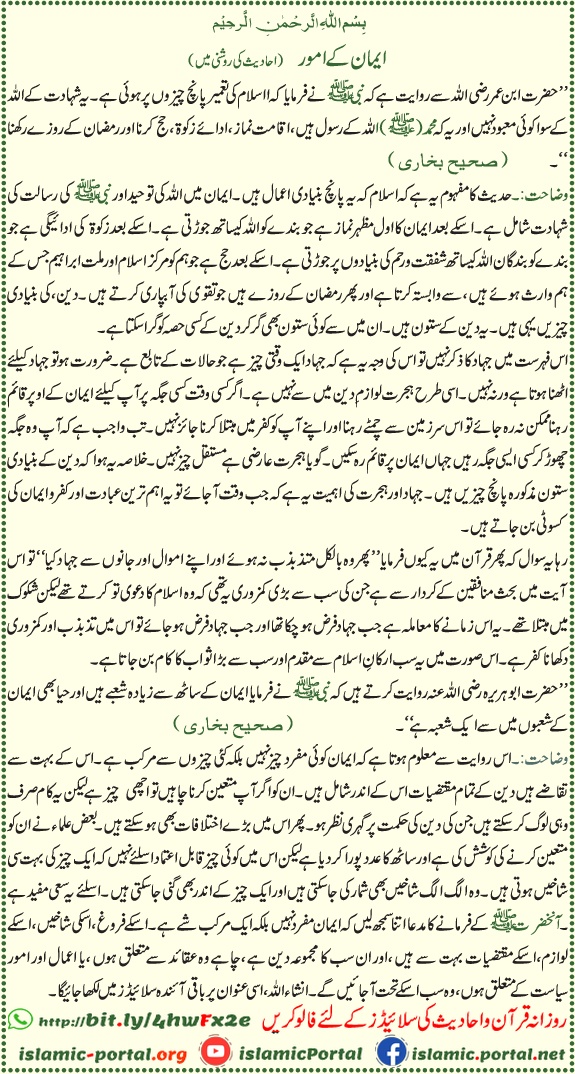
ایمان کے امور (احادیث کی روشنی میں)
وضاحت :- حدیث کا مفہوم یہ ہے کہ اسلام کے یہ پانچ بنیادی اعمال ہیں۔ ایمان میں اللہ کی توحید اور نبی ﷺ کی رسالت کی شہادت شامل ہے۔ اسکے بعد ایمان کا اول مظہر نماز ہے جو بندے کو اللہ کیساتھ جوڑتی ہے۔ اسکے بعد زکوٰۃ کی ادائیگی ہے جو بندے کو بندگان اللہ کیساتھ شفقت و رحم کی بنیادوں پر جوڑتی ہے۔ اسکے بعد حج ہے جو ہم کو مرکز اسلام اور ملت ابراہیم جس کے ہم وارث ہوئے ہیں، سے وابستہ کرتا ہے اور پھر رمضان کے روزے ہیں جو تقوی کی آبیاری کرتے ہیں۔ دین کی بنیادی چیزیں یہی ہیں۔ یہ دین کے ستون ہیں۔ ان میں سے کوئی ستون بھی گر کر دین کے کسی حصہ کو گرا سکتا ہے۔
اس فہرست میں جہاد کا ذکر نہیں تو اس کی وجہ یہ ہے کہ جہاد ایک وقتی چیز ہے جو حالات کے تابع ہے۔ ضرورت ہو تو جہاد کیلئے اٹھنا ہوتا ہے ورنہ نہیں۔ اسی طرح ہجرت لوازم دین میں سے نہیں ہے۔ اگر کسی وقت کسی جگہ پر آپ کیلئے ایمان کے اوپر قائم رہنا ممکن نہ رہ جائے تو اس سرزمین سے چمٹے رہنا اور اپنے آپ کو کفر میں مبتلا کرنا جائز نہیں۔ تب واجب ہے کہ آپ وہ جگہ چھوڑ کر کسی ایسی جگہ رہیں جہاں ایمان پر قائم رہ سکیں۔ گویا ہجرت عارضی ہے مستقل چیز نہیں۔ خلاصہ یہ ہوا کہ دین کے بنیادی ستون مذکورہ پانچ چیزیں ہیں۔ جہاد اور ہجرت کی اہمیت یہ ہے کہ جب وقت آجائے تو یہ اہم ترین عبادت اور کفر و ایمان کی کسوٹی بن جاتے ہیں۔
رہا یہ سوال کہ پھر قرآن میں یہ کیوں فرمایا ”پھر وہ بالکل متذبذب نہ ہوئے اور اپنے اموال اور جانوں سے جہاد کیا“ تو اس آیت میں بحث منافقین کے کردار سے ہے جن کی سب سے بڑی کمزوری یہ تھی کہ وہ اسلام کا دعوی تو کرتے تھے لیکن شکوک میں مبتلا تھے۔ یہ اس زمانے کا معاملہ ہے جب جہاد فرض ہو چکا تھا اور جب جہاد فرض ہو جائے تو اس میں تذبذب اور کمزوری دکھانا کفر ہے۔ اس صورت میں یہ سب ارکان اسلام سے مقدم اور سب سے بڑا ثواب کا کام بن جاتا ہے۔
وضاحت :- اس روایت سے معلوم ہوتا ہے کہ ایمان کوئی مفرد چیز نہیں بلکہ کئی چیزوں سے مرکب ہے۔ اس کے بہت سے تقاضے ہیں دین کے تمام مقتضیات اس کے اندر شامل ہیں۔ ان کو اگر آپ متعین کرنا چاہیں تو اچھی چیز ہے لیکن یہ کام صرف وہی لوگ کر سکتے ہیں جن کی دین کی حکمت پر گہری نظر ہو۔ پھر اس میں بڑے اختلافات بھی ہو سکتے ہیں۔ بعض علماء نے ان کو متعین کرنے کی کوشش کی ہے اور ساٹھ کا عدد پورا کر دیا ہے لیکن اس میں کوئی چیز قابل اعتماد اسلئے نہیں کہ ایک چیز کی بہت سی شاخیں ہوتی ہیں۔ وہ الگ الگ شاخیں بھی شمار کی جا سکتی ہیں اور ایک چیز کے اندر بھی گنی جا سکتی ہیں۔ اسلئے یہ سعی مفید ہے آنحضرت ﷺ کے فرمانے کا مدعا اتنا سمجھ لیں کہ ایمان مفرد نہیں بلکہ ایک مرکب شے ہے۔ اسکے فروغ، اسکی شاخیں، اسکے لوازم، اسکے مقتضیات بہت سے ہیں، اور ان سب کا مجموعہ دین ہے، چاہے وہ عقائد سے متعلق ہوں، یا اعمال اور امور سیاست کے متعلق ہوں، وہ سب اسکے تحت آجائیں گے۔ انشاء اللہ، اسی عنوان پر باقی آئندہ سلائیڈز میں لکھا جائے گا۔
English Translation
Affairs of Iman — In the Light of Hadith
It is narrated from Ibn ‘Umar رضي الله عنه that the Prophet ﷺ said: “Islam has been built upon five things: the testimony that there is no deity except Allah and that Muhammad ﷺ is the Messenger of Allah, establishment of Salah, payment of Zakah, performing Hajj, and fasting in Ramadan.” (Sahih Bukhari)
Explanation:
The meaning of this hadith is that these are the five fundamental acts of Islam. Within Iman are included the testimony of the Oneness of Allah and the testimony of the Messengership of the Prophet ﷺ. After this, the first manifestation of Iman is Salah, which connects a servant with Allah. Then comes the payment of Zakah, which connects a servant with the servants of Allah upon the foundations of compassion and mercy. After this is Hajj, which links us with the center of Islam and the legacy of the nation of Ibrahim, of which we have become inheritors. Then come the fasts of Ramadan, which nurture Taqwa. These are the foundational elements of the religion; they are its pillars. The collapse of any one of these pillars may cause a portion of the religion to fall.
Jihad is not mentioned in this list because it is situational and dependent upon circumstances. When the need arises, one must rise for Jihad; otherwise not. Likewise, migration (Hijrah) is not among the permanent essentials of religion. If at any time or place it becomes impossible for a person to remain steadfast upon Iman, then clinging to that land and falling into disbelief is not permissible. In such a case, it becomes obligatory to leave that place and reside somewhere one can remain firm upon faith. Thus, Hijrah is conditional, not permanent. In summary, the fundamental pillars of the religion are the five mentioned above. The importance of Jihad and Hijrah is that when their time comes, they become among the most significant acts of worship and a decisive criterion between disbelief and faith.
As for the question of why the Quran states: “Then they did not hesitate at all and strove with their wealth and their lives in the path of Allah,” this verse addresses the conduct of the hypocrites, whose greatest weakness was that they claimed Islam yet remained in doubt. This pertains to a time when Jihad had become obligatory; and when Jihad becomes obligatory, showing hesitation and weakness in it constitutes disbelief. In such a situation, it takes precedence over all other pillars of Islam and becomes among the greatest acts of reward.
It is narrated from Abu Hurairah رضي الله عنه that the Prophet ﷺ said: “Iman has more than sixty branches, and modesty (Haya) is also one of the branches of Iman.” (Sahih Bukhari)
Explanation:
From this narration it becomes evident that Iman is not a single entity; rather, it is composed of many elements. It has numerous requirements, and all the demands of religion fall within it. Attempting to enumerate them is beneficial, but this task can only be undertaken by those who possess deep insight into the wisdom of religion. Even then, significant differences of opinion may arise. Some scholars have attempted to enumerate these and complete the number sixty, yet none of these enumerations can be considered definitive, because a single element may have many branches: they may be counted separately, or all included within one. Therefore, such efforts are useful; however, the intent of the Prophet ﷺ is that Iman is not singular but composite. Its growth, its branches, its conditions, and its implications are numerous, and their totality constitutes the religion—whether related to beliefs, actions, or matters of governance—all of them fall under it. In shā’ Allah, the remaining aspects under this title will be presented in the forthcoming slides.