
ایمان کی شاخیں

اشاعت: 16-02-2026
شیئر کریں (صدقہ جاریہ):
iman ki shakhein aur behtareen muslim ki sifaat hadith ki roshni mein

بِسْمِ اللہِ الرَّحْمٰنِ الرَّحِیْمِ

ایمان کی شاخیں (احادیث کی روشنی میں)

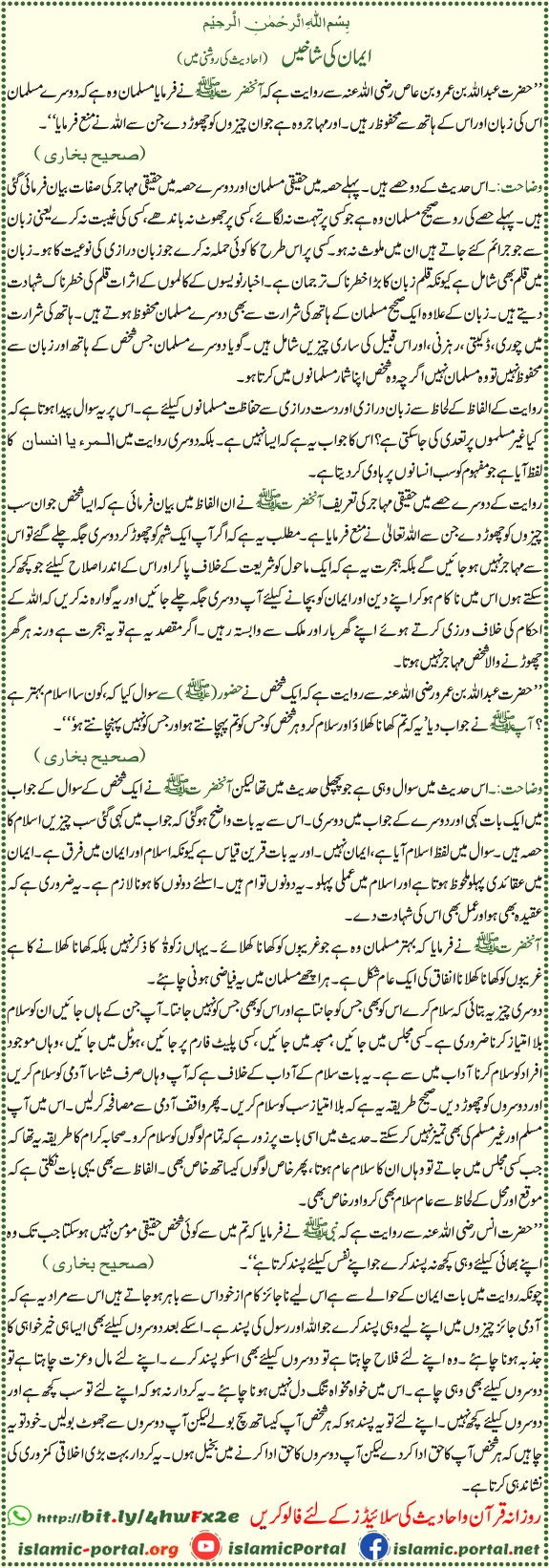
  • ”حضرت عبداللہ بن عمرو بن عاص رضی اللہ عنہ سے روایت ہے کہ آنحضرت نے فرمایا مسلمان وہ ہے کہ دوسرے مسلمان اس کی زبان اور اس کے ہاتھ سے محفوظ رہیں۔ اور مہاجر وہ ہے جو ان چیزوں کو چھوڑ دے جن سے اللہ نے منع فرمایا“۔ (صحیح بخاری)

وضاحت :- اس حدیث کے دو حصے ہیں۔ پہلے حصہ میں حقیقی مسلمان اور دوسرے حصہ میں حقیقی مہاجر کی صفات بیان فرمائی گئی ہیں۔ پہلے حصے کی رو سے صحیح مسلمان وہ ہے جو کسی پر تہمت نہ لگائے، کسی پر جھوٹ نہ باندھے، کسی کی غیبت نہ کرے یعنی زبان سے جو جرائم کئے جاتے ہیں ان میں ملوث نہ ہو۔ کسی پر اس طرح کا کوئی حملہ نہ کرے جو زبان درازی کی نوعیت کا ہو۔ زبان میں قلم بھی شامل ہے کیونکہ قلم زبان کا بڑا خطرناک ترجمان ہے۔ اخبار نویسوں کے کالموں کے اثرات قلم کی خطرناک شہادت دیتے ہیں۔ زبان کے علاوہ ایک صحیح مسلمان کے ہاتھ کی شرارت سے بھی دوسرے مسلمان محفوظ ہوتے ہیں۔ ہاتھ کی شرارت میں چوری، ڈکیتی، رہزنی، اور اس قبیل کی ساری چیزیں شامل ہیں۔ گویا دوسرے مسلمان جس شخص کے ہاتھ اور زبان سے محفوظ نہیں تو وہ مسلمان نہیں اگرچہ وہ شخص اپنا شمار مسلمانوں میں کرتا ہو۔ روایت کے الفاظ کے لحاظ سے زبان درازی اور دست درازی سے حفاظت مسلمانوں کیلئے ہے۔ اس پر یہ سوال پیدا ہوتا ہے کہ کیا غیر مسلموں پر تعدی کی جاسکتی ہے؟ اس کا جواب یہ ہے کہ ایسا نہیں ہے۔ بلکہ دوسری روایت میں المرء یا انسان کا لفظ آیا ہے جو مفہوم کو سب انسانوں پر ہاوی کر دیتا ہے۔ روایت کے دوسرے حصے میں حقیقی مہاجر کی تعریف آنحضرت نے ان الفاظ میں بیان فرمائی ہے کہ ایسا شخص جو ان سب چیزوں کو چھوڑ دے جن سے اللہ تعالیٰ نے منع فرمایا ہے۔ مطلب یہ ہے کہ اگر آپ ایک شہر کو چھوڑ کر دوسری جگہ چلے گئے تو اس سے مہاجر نہیں ہو جائیں گے بلکہ ہجرت یہ ہے کہ ایک ماحول کو شریعت کے خلاف پا کر اور اس کے اندر اصلاح کیلئے جو کچھ کر سکتے ہوں اس میں ناکام ہو کر اپنے دین اور ایمان کو بچانے کیلئے آپ دوسری جگہ چلے جائیں اور یہ گوارہ نہ کریں کہ اللہ کے احکام کی خلاف ورزی کرتے ہوئے اپنے گھر بار اور ملک سے وابستہ رہیں۔ اگر مقصد یہ ہے تو یہ ہجرت ہے ورنہ ہر گھر چھوڑنے والا شخص مہاجر نہیں ہوتا۔

  • ”حضرت عبداللہ بن عمر رضی اللہ عنہ سے روایت ہے کہ ایک شخص نے حضور () سے سوال کیا کہ کون سا اسلام بہتر ہے؟ آپ نے جواب دیا یہ کہ تم کھانا کھلاؤ اور سلام کرو ہر شخص کو جس کو تم پہچانتے ہو اور جس کو نہیں پہچانتے ہو“۔ (صحیح بخاری)

وضاحت :- اس حدیث میں سوال وہی ہے جو پچھلی حدیث میں تھا لیکن آنحضرت نے ایک شخص کے سوال کے جواب میں ایک بات کہی اور دوسرے کے جواب میں دوسری۔ اس سے یہ بات واضح ہو گئی کہ جواب میں کہی گئی سب چیزیں اسلام کا حصہ ہیں۔ سوال میں لفظ اسلام آیا ہے، ایمان نہیں۔ اور یہ بات قرین قیاس ہے کیونکہ اسلام اور ایمان میں فرق ہے۔ ایمان میں عقائدی پہلو ملحوظ ہوتا ہے اور اسلام میں عملی پہلو۔ یہ دونوں توام ہیں۔ اسلئے دونوں کا ہونا لازم ہے۔ یہ ضروری ہے کہ عقیدہ بھی ہو اور عمل بھی اس کی شہادت دے۔ آنحضرت نے فرمایا کہ بہتر مسلمان وہ ہے جو غریبوں کو کھانا کھلائے۔ یہاں زکوٰۃ کا ذکر نہیں بلکہ کھانا کھلانے کا ہے غریبوں کو کھانا کھلانا انفاق کی ایک عام شکل ہے۔ ہر اچھے مسلمان میں یہ فیاضی ہونی چاہئے۔ دوسری چیز یہ بتائی کہ سلام کرے اس کو بھی جس کو جانتا ہے اور اس کو بھی جس کو نہیں جانتا۔ آپ جن کے ہاں جائیں ان کو سلام بلا امتیاز کرنا ضروری ہے۔ کسی مجلس میں جائیں، مسجد میں جائیں، کسی پلیٹ فارم پر جائیں، ہوٹل میں جائیں، وہاں موجود افراد کو سلام کرنا آداب میں سے ہے۔ یہ بات سلام کے آداب کے خلاف ہے کہ آپ وہاں صرف شناسا آدمی کو سلام کریں اور دوسروں کو چھوڑ دیں۔ صحیح طریقہ یہ ہے کہ بلا امتیاز سب کو سلام کریں۔ پھر واقف آدمی سے مصافحہ کرلیں۔ اس میں آپ مسلم اور غیر مسلم کی بھی تمیز نہیں کر سکتے۔ حدیث میں اسی بات پر زور ہے کہ تمام لوگوں کو سلام کرو۔ صحابہ کرام کا طریقہ یہ تھا کہ جب کسی مجلس میں جاتے تو وہاں ان کا سلام عام ہوتا، پھر خاص لوگوں کیساتھ خاص بھی۔ الفاظ سے بھی یہی بات نکلتی ہے کہ موقع اور محل کے لحاظ سے عام سلام بھی کرو اور خاص بھی۔

  • ”حضرت انس رضی اللہ عنہ سے روایت ہے کہ نبی نے فرمایا کہ تم میں سے کوئی شخص حقیقی مومن نہیں ہو سکتا جب تک وہ اپنے بھائی کیلئے وہی کچھ نہ پسند کرے جو اپنے نفس کیلئے پسند کرتا ہے“۔ (صحیح بخاری)

چونکہ روایت میں بات ایمان کے حوالے سے ہے اس لیے ناجائز کام از خود اس سے باہر ہو جاتے ہیں اس سے مراد یہ ہے کہ آدمی جائز چیزوں میں اپنے لیے وہی پسند کرے جو اللہ اور رسول کی پسند ہے۔ اسکے بعد دوسروں کیلئے بھی ایسا ہی خیر خواہی کا جذبہ ہونا چاہئے۔ وہ اپنے لئے فلاح چاہتا ہے تو دوسروں کیلئے بھی اسکو پسند کرے۔ اپنے لئے مال و عزت چاہتا ہے تو دوسروں کیلئے بھی وہی چاہے۔ اس میں خواہ مخواہ تنگ دل نہیں ہونا چاہئے۔ یہ کردار نہ ہو کہ اپنے لئے تو سب کچھ ہے اور دوسروں کیلئے کچھ نہیں۔ اپنے لئے تو یہ پسند ہو کہ ہر شخص آپ کیساتھ سچ بولے لیکن آپ دوسروں سے جھوٹ بولیں۔ خود تو یہ چاہیں کہ ہر شخص آپ کا حق ادا کر دے لیکن آپ دوسروں کا حق ادا کرنے میں بخیل ہوں۔ یہ کردار بہت بڑی اخلاقی کمزوری کی نشاندہی کرتا ہے۔

Branches of Iman — In the Light of Hadith

It is narrated from ‘Abdullah ibn ‘Amr ibn al-‘As رضي الله عنه that the Prophet said: “A Muslim is the one from whose tongue and hand other Muslims remain safe, and a Muhajir is the one who abandons what Allah has forbidden.” (Sahih Bukhari)

Explanation:
This hadith has two parts. In the first part, the qualities of a true Muslim are described, and in the second part, the qualities of a true Muhajir are explained. According to the first part, a true Muslim is one who does not accuse others falsely, does not fabricate lies against anyone, and does not engage in backbiting—meaning he is not involved in the crimes committed by the tongue. He does not attack anyone in a manner that constitutes verbal aggression. The term “tongue” also includes the pen, for the pen is a powerful and often dangerous representative of speech. The impact of written words, such as those found in journalistic columns, demonstrates the seriousness of this responsibility. In addition to this, other Muslims remain safe from the wrongdoing of his hand. The wrongdoing of the hand includes theft, robbery, banditry, and all related actions. Thus, the person from whose hand and tongue other Muslims are not safe is not a true Muslim, even if he considers himself among the Muslims. Although the wording of the narration specifically mentions Muslims being safe from one’s tongue and hand, this does not imply that wrongdoing toward non-Muslims is permissible. In another narration, the word “person” or “human” is used, which extends the meaning to all people.

In the second part of the narration, the Prophet defined a true Muhajir as the one who abandons all those things which Allah has prohibited. This means that merely leaving one city for another does not make a person a Muhajir. Rather, Hijrah is to leave an environment that is contrary to Shari‘ah, and after striving for reform within it and failing, to move elsewhere in order to safeguard one’s religion and Iman. If the intention is this, then it is Hijrah; otherwise, not everyone who leaves his home can be called a Muhajir.

It is narrated from ‘Abdullah ibn ‘Umar رضي الله عنه that a person asked the Prophet : “Which Islam is best?” He replied: “That you feed others and offer Salam to everyone you know and to those you do not know.” (Sahih Bukhari)

Explanation:
The question in this hadith is the same as in the previous narration, yet the Prophet gave one response to one person and another response to someone else. This clarifies that all such teachings form part of Islam. The word used in the question is Islam, not Iman, and this is significant because there is a distinction between Islam and Iman. Iman primarily relates to belief, while Islam relates to practice. These two are inseparable; both must exist together. It is necessary that belief be present and that actions bear witness to it. The Prophet stated that the best Muslim is the one who feeds the poor. Zakah is not specifically mentioned here; rather, feeding people is highlighted as a general form of charity and generosity, which should be present in every good Muslim. The second instruction is to offer Salam both to those one knows and to those one does not know. Whenever you visit a place—whether a gathering, a mosque, a platform, or even a public place—you should greet all present without distinction. It is against proper etiquette to greet only those whom one recognizes while ignoring others. The correct practice is to greet everyone equally and then shake hands with those whom one knows. The wording of the hadith emphasizes greeting all people, and the practice of the Companions رضي الله عنهم was that when they entered a gathering, their greeting was general, and thereafter specific greetings were offered to particular individuals as appropriate.

It is narrated from Anas رضي الله عنه that the Prophet said: “None of you can be a true believer until he loves for his brother what he loves for himself.” (Sahih Bukhari)

Since this narration speaks in the context of Iman, unlawful matters are automatically excluded from its meaning. Rather, it refers to lawful things—that a person should desire for others what Allah and His Messenger approve for him. After this, he should have a sincere concern for the well-being of others. Just as he seeks success and prosperity for himself, he should wish the same for others. If he desires wealth and honor for himself, he should desire them for others as well. He should not be narrow-hearted, desiring everything for himself and nothing for others. It should not be that he wishes others to speak truthfully with him while he himself speaks falsely to others, or that he expects others to fulfill his rights while he is reluctant to fulfill the rights of others. Such conduct reflects a serious moral deficiency.