بِسْمِ اللہِ الرَّحْمٰنِ الرَّحِیْمِ
روح کا سفر (احادیث کی روشنی میں)
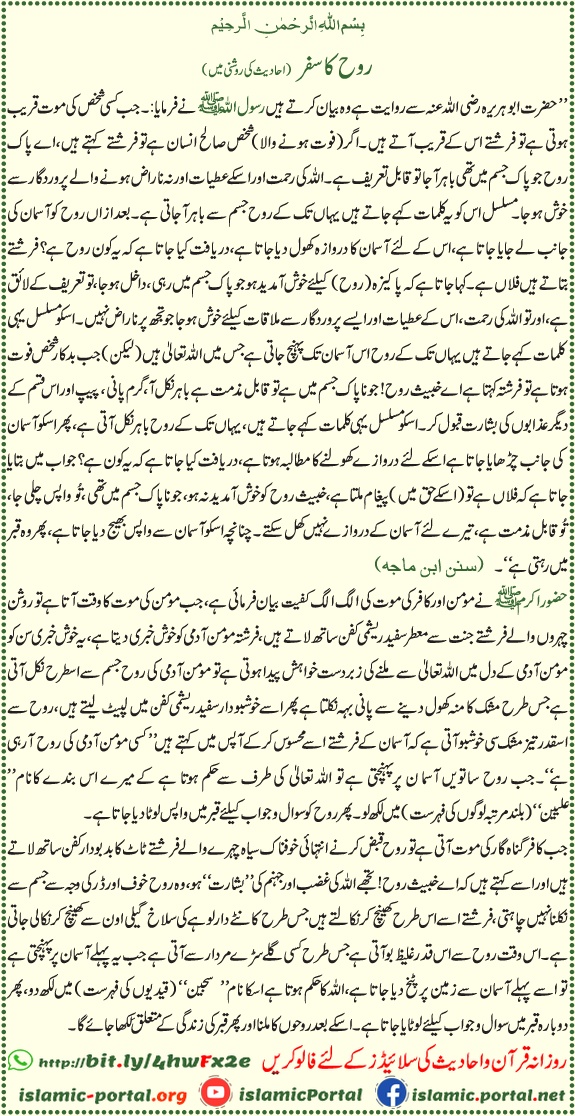
"حضرت ابوہریرہ رضی اللہ عنہ سے روایت ہے وہ بیان کرتے ہیں رسول اللہ ﷺ نے فرمایا: جب کسی شخص کی موت قریب ہوتی ہے تو فرشتے اس کے قریب آتے ہیں۔ اگر (فوت ہونے والا) شخص صالح انسان ہے تو فرشتے کہتے ہیں، اے پاک روح جو پاک جسم میں تھی باہر آ جا تو قابل تعریف ہے۔ اللہ کی رحمت اور اسکے عطیات اور نہ ناراض ہونے والے پروردگار سے خوش ہو جا۔ مسلسل اس کو یہ کلمات کہے جاتے ہیں یہاں تک کہ روح جسم سے باہر آجاتی ہے۔ بعد ازاں روح کو آسمان کی جانب لے جایا جاتا ہے، اس کے لئے آسمان کا دروازہ کھول دیا جاتا ہے، دریافت کیا جاتا ہے کہ یہ کون روح ہے؟ فرشتے بتاتے ہیں فلاں ہے۔ کہا جاتا ہے کہ پاکیزہ (روح) کیلئے خوش آمدید جو پاک جسم میں رہی، داخل ہو جا، تو تعریف کے لائق ہے، اور تو اللہ کی رحمت، اس کے عطیات اور ایسے پروردگار سے ملاقات کیلئے خوش ہو جا جو تجھ پر ناراض نہیں۔ اسکو مسلسل یہی کلمات کہے جاتے ہیں یہاں تک کہ روح اس آسمان تک پہنچ جاتی ہے جس میں اللہ تعالیٰ ہیں (لیکن) جب بدکار شخص فوت ہوتا ہے تو فرشتے کہتا ہے اے خبیث روح! جو ناپاک جسم میں ہے تو قابل مذمت ہے باہر نکل آ، گرم پانی، پیپ اور اس قسم کے دیگر عذابوں کی بشارت قبول کر۔ اسکو مسلسل یہی کلمات کہے جاتے ہیں، یہاں تک کہ روح باہر نکل آتی ہے، پھر اسکو آسمان کی جانب چڑھایا جاتا ہے اسکے لئے دروازے کھولنے کا مطالبہ ہوتا ہے، دریافت کیا جاتا ہے کہ یہ کون ہے؟ جواب میں بتایا جاتا ہے کہ فلاں ہے تو (اسکے حق میں) پیغام ملتا ہے، خبیث روح کو خوش آمدید نہ ہو، جو ناپاک جسم میں تھی، تُو واپس چلی جا، تُو قابل مذمت ہے، تیرے لئے آسمان کے دروازے نہیں کھل سکتے۔ چنانچہ اسکو آسمان سے واپس بھیج دیا جاتا ہے، پھر وہ قبر میں رہتی ہے۔" (سنن ابن ماجہ)
حضور اکرم ﷺ نے مومن اور کافر کی موت کی الگ الگ کیفیت بیان فرمائی ہے، جب مومن کی موت کا وقت آتا ہے تو روشن چہروں والے فرشتے جنت سے معطر سفید ریشمی کفن ساتھ لاتے ہیں، فرشتہ مومن آدمی کو خوش خبری دیتا ہے، یہ خوش خبری سن کو مومن آدمی کے دل میں اللہ تعالیٰ سے ملنے کی زبردست خواہش پیدا ہوتی ہے تو مومن آدمی کی روح جسم سے اسطرح نکل آتی ہے جس طرح مشک کا منہ کھول دینے سے پانی بہہ نکلتا ہے پھر اسے خوشبودار سفید ریشمی کفن میں لپیٹ لیتے ہیں، روح سے اسقدر تیز مشک سی خوشبو آتی ہے کہ آسمان کے فرشتے اسے محسوس کر کے آپس میں کہتے ہیں ”کسی مومن آدمی کی روح آ رہی ہے“۔ جب روح ساتویں آسمان پر پہنچتی ہے تو اللہ تعالیٰ کی طرف سے حکم ہوتا ہے کہ میرے اس بندے کا نام ”علیین“ (بلند مرتبہ لوگوں کی فہرست) میں لکھ لو۔ پھر روح کو سوال و جواب کیلئے قبر میں واپس لوٹا دیا جاتا ہے۔ جب کافر گناہ گار کی موت آتی ہے تو روح قبض کرنے انتہائی خوفناک سیاہ چہرے والے فرشتے ٹاٹ کا بدبودار کفن ساتھ لاتے ہیں اور اسے کہتے ہیں کہ اے خبیث روح! تجھے اللہ کی غضب اور جہنم کی ’بشارت‘ ہو، وہ روح خوف اور ڈر کی وجہ سے جسم سے نکلنا نہیں چاہتی، فرشتے اسے اس طرح کھینچ کر نکالتے ہیں جس طرح کانٹے دار لوہے کی سلاخ گیلی اون سے کھینچ کر نکالی جاتی ہے۔ اس وقت روح سے اس قدر غلیظ بو آتی ہے جس طرح کسی گلے سڑے مردار سے آتی ہے جب یہ پہلے آسمان پر پہنچتی ہے تو اسے پہلے آسمان سے زمین پر پٹخ دیا جاتا ہے، اللہ کا حکم ہوتا ہے اسکا نام ”سجین“ (قیدیوں کی فہرست) میں لکھ دو، پھر دوبارہ قبر میں سوال و جواب کیلئے لوٹایا جاتا ہے۔ اسکے بعد روحوں کا ملنا اور پھر قبر کی زندگی کے متعلق لکھا جائے گا۔
English Translation
In the Name of Allah, the Most Gracious, the Most Merciful
The Journey of the Soul (In the Light of Hadith)
Hazrat Abu Hurairah رضي الله عنه narrates that the Messenger of Allah ﷺ said:
“When a person’s death approaches, angels come near him. If the dying person is righteous, they say: ‘O pure soul that was in a pure body, come out, praiseworthy. Rejoice in the mercy of Allah, His favors, and a Lord who is not displeased with you.’ These words continue to be said until the soul leaves the body. Then it is taken toward the heavens, and the gates of heaven are opened for it. It is asked: ‘Whose soul is this?’ The angels reply: ‘It is so-and-so.’ It is then said: ‘Welcome to the pure soul that resided in a pure body. Enter in a praiseworthy state, and rejoice in the mercy of Allah, His favors, and a Lord who is not angry with you.’ These words continue to be said until it reaches the heaven in which Allah wills.
But when a wicked person dies, the angels say: ‘O impure soul that was in an impure body, come out in disgrace. Receive the tidings of boiling fluid, pus, and other punishments.’ These words continue to be said until the soul leaves. Then it is taken toward the heaven and permission is sought to open the gates. It is asked: ‘Whose soul is this?’ They reply: ‘It is so-and-so.’ It is then said: ‘No welcome for the impure soul that resided in an impure body. Return, condemned, for the gates of heaven will not be opened for you.’ Thus it is sent back from the heaven and returns to the grave.”
(Sunan Ibn Majah)
The Messenger of Allah ﷺ described distinct states at the time of death for a believer and a disbeliever.
When the time of death of a believer arrives, angels with radiant faces descend from Paradise carrying a perfumed white shroud. The angel gives glad tidings to the believer, and upon hearing this, an intense longing to meet Allah develops in his heart. His soul then leaves the body as gently as water flows from the mouth of a vessel. It is wrapped in the fragrant white shroud, and a scent like the finest musk emanates from it. The angels of the heavens sense this fragrance and say to one another: “The soul of a believing servant has arrived.”
When the soul reaches the seventh heaven, a command comes from Allah that the name of this servant be recorded in Illiyyin, the register of the righteous. Thereafter, the soul is returned to the grave for questioning.
When a disbelieving or sinful person dies, angels with dark and terrifying faces descend carrying a coarse, foul-smelling shroud. They say: “O impure soul, receive the tidings of Allah’s anger and the punishment of Hell.” Out of fear, the soul refuses to leave the body, and it is pulled out violently like a barbed iron skewer being dragged through wet wool. A foul stench emanates from it, like that of a decaying corpse. When it reaches the first heaven, it is cast down. A command comes from Allah that the name of this person be recorded in Sijjin, the register of the condemned. Thereafter, the soul is returned to the grave for questioning.
Further details regarding the meeting of souls and the life of the grave will be discussed later.