بِسْمِ اللہِ الرَّحْمٰنِ الرَّحِیْمِ
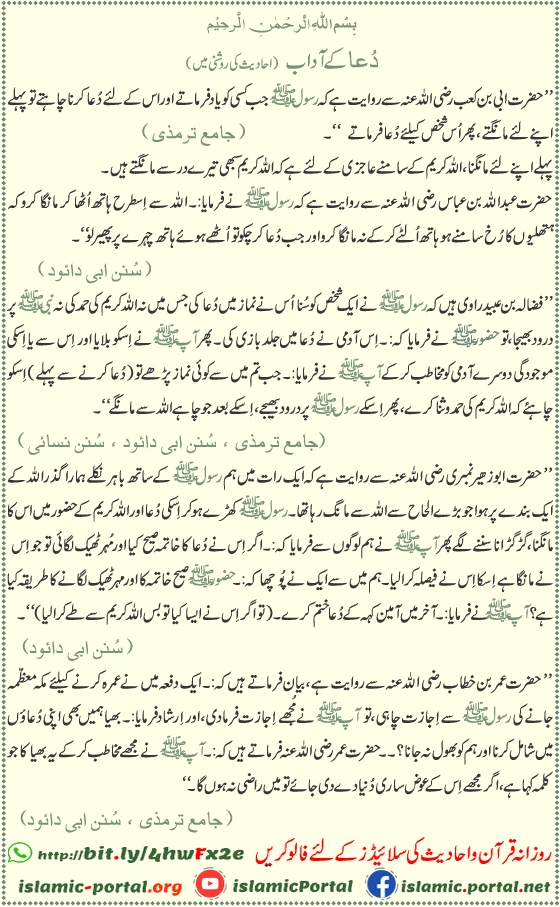
دُعا کے آداب (احادیث کی روشنی میں)
"حضرت ابی بن کعب رضی اللہ عنہ سے روایت ہے کہ رسول اللہ ﷺ جب کسی کو یاد فرماتے اور اس کے لئے دُعا کرنا چاہتے تو پہلے اپنے لئے مانگتے، پھر اُس شخص کیلئے دُعا فرماتے"۔ (جامع ترمذی) پہلے اپنے لئے مانگنا، اللہ کریم کے سامنے عاجزی کے لئے ہے کہ اللہ کریم سبھی تیرے در کے مانگتے ہیں۔
حضرت عبداللہ بن عباس رضی اللہ عنہ سے روایت ہے کہ رسول اللہ ﷺ نے فرمایا:- اللہ سے اسطرح ہاتھ اٹھا کر مانگا کرو کہ ہتھیلیوں کا رُخ سامنے ہو ہاتھ اُلٹے کر کے نہ مانگا کرو اور جب دُعا کر چکو تو اُٹھے ہوئے ہاتھ چہرے پر پھیر لو"۔ (سُنن ابی دائود)
"فضالہ بن عبید راوی ہیں کہ رسول اللہ ﷺ نے ایک شخص کو سُنا اُس نے نماز میں دُعا کی جس میں نہ اللہ کریم کی حمد کی نہ نبی ﷺ پر درود بھیجا، تو حضور ﷺ نے فرمایا کہ:- اِس آدمی نے دُعا میں جلد بازی کی۔ پھر آپ ﷺ نے اِسکو بلایا اور اِس سے یا اِسکی موجودگی دوسرے آدمی کو مخاطب کر کے آپ ﷺ نے فرمایا:- جب تم میں سے کوئی نماز پڑھے تو (دُعا کرنے سے پہلے) اِسکو چاہئے کہ اللہ کریم کی حمد وثنا کرے، پھر اسکے رسول ﷺ پر درود بھیجے، اسکے بعد جو چاہے اللہ سے مانگے"۔ (جامع ترمذی ، سُنن ابی دائود ، سُنن نسائی)
"حضرت ابوزہیر نمیری رضی اللہ عنہ سے روایت ہے کہ ایک رات میں ہم رسول اللہ ﷺ کے ساتھ باہر نکلے ہمارا گزر اللہ کے ایک بندے پر ہوا جو بڑے الحاح سے اللہ سے مانگ رہا تھا۔ رسول اللہ ﷺ کھڑے ہو کر اسکی دُعا اور اللہ کریم کے حضور میں اس کا مانگنا، گڑگڑانا سننے لگے پھر آپ ﷺ نے ہم لوگوں سے فرمایا کہ:- اگر اس نے دُعا کا خاتمہ صحیح کیا اور مُہر ٹھیک لگائی تو جو اس نے مانگا ہے اسکا اِس نے فیصلہ کرا لیا۔ ہم میں سے ایک نے پوچھا کہ:- حضور ﷺ صحیح خاتمہ کا اور مُہر ٹھیک لگانے کا طریقہ کیا ہے؟ آپ ﷺ نے فرمایا:- آخر میں آمین کہہ کے دُعا ختم کرے۔ (تو اگر اس نے ایسا کیا تو بس اللہ کریم سے طے کرا لیا)"۔ (سُنن ابی دائود)
"حضرت عمر بن خطاب رضی اللہ عنہ سے روایت ہے، بیان فرماتے ہیں کہ:-
ایک دفعہ میں نے عمرہ کرنے کیلئے مکہ معظمہ جانے کی رسول اللہ ﷺ سے اجازت چاہی، تو آپ ﷺ نے مجھے اجازت فرمادی، اور ارشاد فرمایا:- بھیا ہمیں بھی اپنی دُعائوں میں شامل کرنا اور ہم کو بھول نہ جانا؟۔۔ حضرت عمر رضی اللہ عنہ فرماتے ہیں کہ:- آپ ﷺ نے مجھے مخاطب کر کے یہ بھیا کا جو کلمہ کہا ہے، اگر مجھے اس کے عوض ساری دُنیا دے دی جائے تو میں راضی نہ ہوں گا"۔
(جامع ترمذی ، سُنن ابی دائود)
English Translation
In the Name of Allah, the Most Gracious, the Most Merciful
Etiquettes of Supplication — In the Light of Hadith
Ubayy ibn Ka‘b رضي الله عنه narrates that whenever the Messenger of Allah ﷺ remembered someone and intended to supplicate for him, he would first supplicate for himself and then supplicate for that person.
(Jami‘ al-Tirmidhi)
Supplicating for oneself first reflects humility before Allah, acknowledging that all people are in need at His door and dependent upon His mercy.
‘Abdullah ibn ‘Abbas رضي الله عنه narrates that the Messenger of Allah ﷺ said: Ask Allah by raising your hands in such a way that the palms face forward, and do not supplicate with the backs of the hands raised. And when you finish supplicating, wipe your hands over your face.
(Sunan Abi Dawud)
Fudalah ibn ‘Ubayd رضي الله عنه narrates that the Messenger of Allah ﷺ heard a man supplicating during prayer without praising Allah and without sending blessings upon the Prophet ﷺ. The Prophet ﷺ said: This man has been hasty in his supplication. Then he called him and said — or addressed another man in his presence: When one of you prays, he should begin by praising Allah and glorifying Him, then send blessings upon His Prophet ﷺ, and thereafter supplicate for whatever he wishes.
(Jami‘ al-Tirmidhi, Sunan Abi Dawud, Sunan al-Nasa’i)
Abu Zuhayr al-Numayri رضي الله عنه narrates: One night we went out with the Messenger of Allah ﷺ and passed by a man who was earnestly supplicating to Allah. The Messenger of Allah ﷺ stopped and listened to his supplication and humble pleading before Allah. Then he said to us: If he concludes his supplication properly and seals it correctly, he will have secured what he asked for. One of us asked: O Messenger of Allah ﷺ, what is meant by concluding it properly and sealing it correctly? He ﷺ replied: He should end his supplication by saying “Amin.”
(Sunan Abi Dawud)
‘Umar ibn al-Khattab رضي الله عنه narrates: Once I sought permission from the Messenger of Allah ﷺ to perform ‘Umrah and he granted me permission. He then said: My brother, include us in your supplications and do not forget us. ‘Umar رضي الله عنه says: The word “my brother” that he ﷺ addressed me with — if I were given the whole world in exchange for it, I would not be more pleased.
(Jami‘ al-Tirmidhi, Sunan Abi Dawud)