
سلام کرنے کی فضیلت کا بیان (۱)

اشاعت: 19-02-2026
شیئر کریں (صدقہ جاریہ):
Salam karne ki fazilat aur assalamualaikum ke sawab par hadith ki roshni mein rehnumai Urdu Islamic content

بِسْمِ اللہِ الرَّحْمٰنِ الرَّحِیْمِ

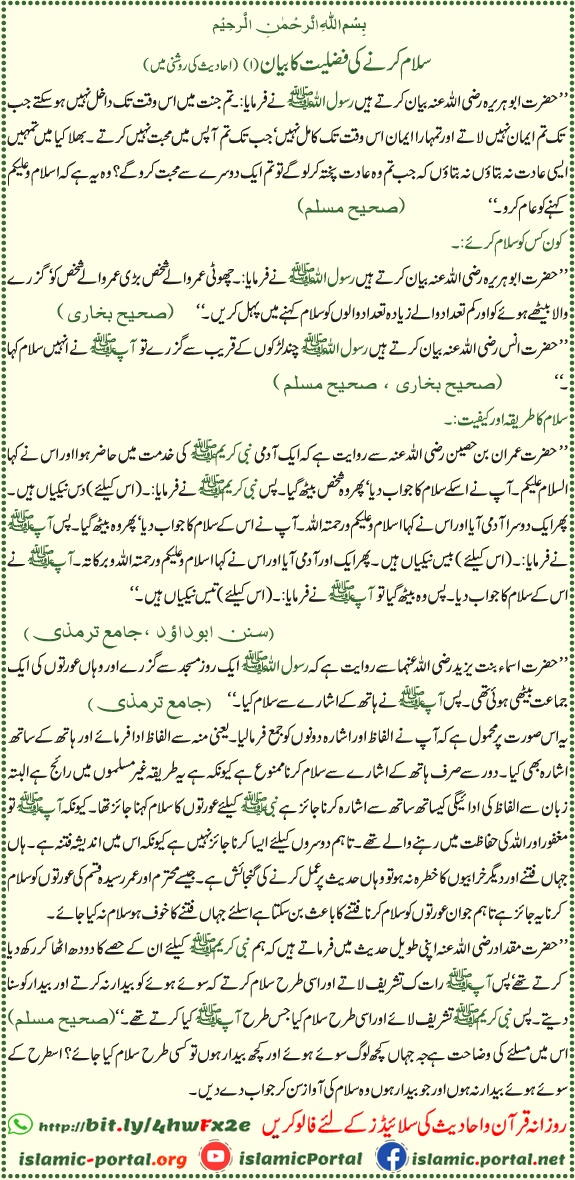
سلام کرنے کی فضیلت کا بیان (۱) (احادیث کی روشنی میں)

  • ”حضرت ابوہریرہ رضی اللہ عنہ بیان کرتے ہیں رسول اللہ نے فرمایا: تم جنت میں اس وقت تک داخل نہیں ہو سکتے جب تک تم ایمان نہیں لاتے اور تمہارا ایمان اس وقت تک کامل نہیں‘ جب تک تم آپس میں محبت نہیں کرتے۔ بھلا کیا میں تمہیں ایسی عادت نہ بتاؤں کہ جب تم وہ عادت پختہ کرلو گے تو تم ایک دوسرے سے محبت کرو گے؟ وہ یہ ہے کہ اسلام علیکم کہنے کو عام کرو“۔ (صحیح مسلم)

کون کس کو سلام کرے :۔

  • ”حضرت ابوہریرہ رضی اللہ عنہ بیان کرتے ہیں رسول اللہ نے فرمایا: چھوٹی عمر والے شخص بڑی عمر والے شخص کو‘ گزرنے والا بیٹھے ہوئے کو اور کم تعداد والے زیادہ تعداد والوں کو سلام کہنے میں پہل کریں“۔ (صحیح بخاری)

  • ”حضرت انس رضی اللہ عنہ بیان کرتے ہیں رسول اللہ چند لڑکوں کے قریب سے گزرے تو آپ نے انہیں سلام کہا“۔ (صحیح بخاری ، صحیح مسلم)

سلام کا طریقہ اور کیفیت :۔

  • ”حضرت عمران بن حصین رضی اللہ عنہ سے روایت ہے کہ ایک آدمی نبی کریم کی خدمت میں حاضر ہوا اور اس نے کہا: السلام علیکم۔ آپ نے اسکے سلام کا جواب دیا‘ پھر وہ شخص بیٹھ گیا۔ پس نبی کریم نے فرمایا: (اس کیلئے) دس نیکیاں ہیں۔ پھر ایک دوسرا آدمی آیا اور اس نے کہا السلام علیکم ورحمتہ اللہ۔ آپ نے اس کے سلام کا جواب دیا‘ پھر وہ بیٹھ گیا۔ پس آپ نے فرمایا: (اس کیلئے) بیس نیکیاں ہیں۔ پھر ایک اور آدمی آیا اور اس نے کہا السلام علیکم ورحمتہ اللہ و برکاتہ۔ آپ نے اس کے سلام کا جواب دیا۔ پس وہ بیٹھ گیا تو آپ نے فرمایا: (اس کیلئے) تیس نیکیاں ہیں“۔ (سنن ابو دائود ، جامع ترمذی)

  • ”حضرت اسماء بنت یزید رضی اللہ عنہا سے روایت ہے کہ رسول اللہ ایک روز مسجد سے گزرے اور وہاں عورتوں کی ایک جماعت بیٹھی ہوئی تھی۔ پس آپ نے ہاتھ کے اشارے سے سلام کیا“۔ (جامع ترمذی)

یہ اس صورت پر محمول ہے کہ آپ نے الفاظ اور اشارہ دونوں کو جمع فرمالیا۔ یعنی منہ سے الفاظ ادا فرمائے اور ہاتھ کے ساتھ اشارہ بھی کیا۔ دور سے صرف ہاتھ کے اشارے سے سلام کرنا ممنوع ہے کیونکہ یہ طریقہ غیر مسلموں میں رائج ہے البتہ زبان سے الفاظ کی ادائیگی کیساتھ ساتھ سے اشارہ کرنا جائز ہے نبی کیلئے عورتوں کا سلام کہنا جائز تھا۔ کیونکہ آپ تو مغفور اور اللہ کی حفاظت میں رہنے والے تھے۔ تاہم دوسروں کیلئے ایسا کرنا جائز نہیں ہے کیونکہ اس میں اندیشہ فتنہ ہے۔ ہاں جہاں فتنے اور دیگر خرابیوں کا خطرہ نہ ہو تو وہاں حدیث پر عمل کرنے کی گنجائش ہے۔ جیسے محترم اور عمر رسیدہ قسم کی عورتوں کو سلام کرنا یہ جائز ہے تاہم جوان عورتوں کو سلام کرنا فتنے کا باعث بن سکتا ہے اسلئے جہاں فتنے کا خوف ہو سلام نہ کیا جائے۔

  • ”حضرت مقداد رضی اللہ عنہ اپنی طویل حدیث میں فرماتے ہیں کہ ہم نبی کریم کے لئے ان کے حصے کا دودھ اٹھا کر رکھ دیا کرتے تھے‘ پس آپ رات کے تشریف لاتے اور اسی طرح سلام کرتے کہ سوئے ہوئے کو بیدار نہ کرتے اور بیدار کو سنا دیتے۔ پس نبی کریم تشریف لائے اور اسی طرح سلام کیا جس طرح آپ کیا کرتے تھے“۔ (صحیح مسلم)

اس میں مسلئے کی وضاحت ہے جہ جہاں کچھ لوگ سوئے ہوئے اور کچھ بیدار ہوں تو کسی طرح سلام کیا جائے؟ اسطرح کے سوئے ہوئے بیدار نہ ہوں اور جو بیدار ہوں وہ سلام کی آواز سن کر جواب دے دیں۔

In the name of Allah, the Most Gracious, the Most Merciful

The Virtue of Greeting with Salam (1) (In the Light of Hadith)

“Hazrat Abu Hurairah (may Allah be pleased with him) narrates that the Messenger of Allah said: You will not enter Paradise until you believe, and your faith will not be complete until you love one another. Shall I not inform you of a practice that, when you adopt it firmly, you will love one another? Spread the greeting of As-salamu ‘alaykum among yourselves.” (Sahih Muslim)

Who should greet whom:

“Hazrat Abu Hurairah (may Allah be pleased with him) narrates that the Messenger of Allah said: The younger person should greet the elder, the one who is passing should greet the one who is sitting, and the smaller group should greet the larger group.” (Sahih al-Bukhari)

“Hazrat Anas (may Allah be pleased with him) narrates that the Messenger of Allah passed by some boys and greeted them.” (Sahih al-Bukhari, Sahih Muslim)

The method and manner of greeting:

“Hazrat ‘Imran bin Husayn (may Allah be pleased with him) narrates that a man came to the Prophet and said: As-salamu ‘alaykum. He returned the greeting, then the man sat down. The Prophet said: Ten good deeds (are recorded) for him. Then another man came and said: As-salamu ‘alaykum wa rahmatullah. He returned the greeting, then he sat down. The Prophet said: Twenty good deeds (are recorded) for him. Then another man came and said: As-salamu ‘alaykum wa rahmatullahi wa barakatuh. He returned the greeting; when he sat down, the Prophet said: Thirty good deeds (are recorded) for him.” (Sunan Abu Dawud, Jami‘ al-Tirmidhi)

“Hazrat Asma’ bint Yazid (may Allah be pleased with her) narrates that the Messenger of Allah once passed by the mosque while a group of women were sitting there, and he greeted them with a gesture of his hand.” (Jami‘ al-Tirmidhi)

This is understood to mean that he combined both words and gesture; that is, he uttered the words verbally and also indicated with his hand. Greeting from a distance by hand gesture alone is prohibited because this method is common among non-Muslims; however, making a gesture along with verbal greeting is permissible. It was permissible for women to greet the Prophet , because he was protected and safeguarded by Allah. As for others, doing so is not permissible where there is fear of temptation. Where there is no fear of temptation or other harm, there is scope to act upon the hadith. For example, greeting respectable and elderly women is permissible; however, greeting young women may become a cause of temptation, therefore where there is fear of temptation, greeting should be avoided.

“Hazrat Miqdad (may Allah be pleased with him) says in his lengthy hadith that we used to set aside the Prophet’s share of milk for him. He would come at night and greet in such a manner that he would not awaken one who was sleeping but would let the one who was awake hear. Then the Prophet came and greeted in the manner he used to greet.” (Sahih Muslim)

In this there is clarification of the issue: where some people are asleep and some are awake, how should greeting be given? It should be given in such a manner that those who are asleep are not awakened, while those who are awake hear the greeting and respond to it.