

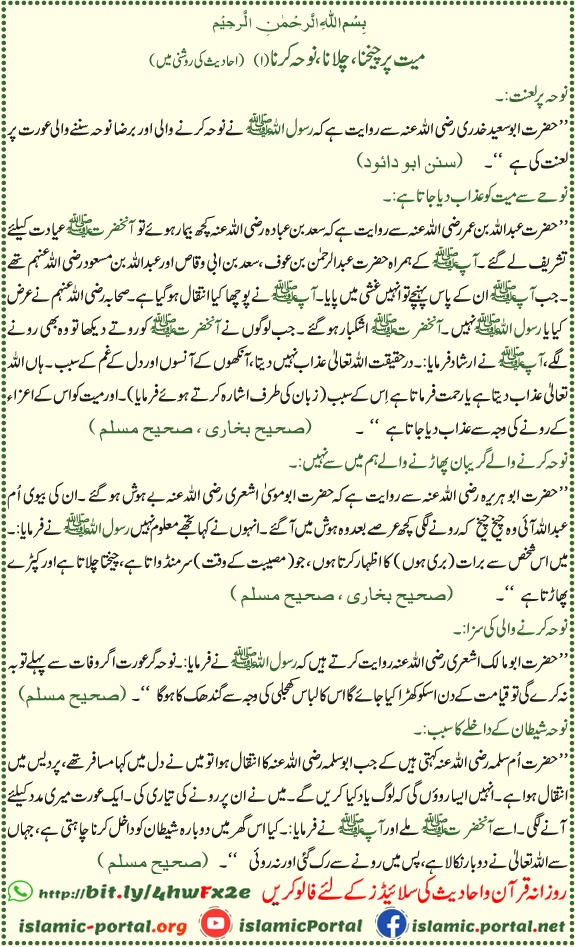
میت پر چیخنا، چلانا، نوحہ کرنا (۱)

اشاعت: 17-02-2026
شیئر کریں (صدقہ جاریہ):
mayyat par noha karna hadith islam matam aur cheekhna mana hai

بِسْمِ اللہِ الرَّحْمٰنِ الرَّحِیْمِ

میت پر چیخنا، چلانا، نوحہ کرنا (۱) (احادیث کی روشنی میں)

نوحہ پر لعنت :-

  • ”حضرت ابوسعید خدری رضی اللہ عنہ سے روایت ہے کہ رسول اللہ نے نوحہ کرنے والی اور برضا نوحہ سننے والی عورت پر لعنت کی ہے “۔ (سنن ابو دائود)

نوحہ سے میت کو عذاب دیا جاتا ہے :-

  • ”حضرت عبداللہ بن عمر رضی اللہ عنہ سے روایت ہے کہ سعد بن عبادہ رضی اللہ عنہ کچھ بیمار ہوئے تو آنحضرت عیادت کیلئے تشریف لے گئے۔ آپ کے ہمراہ حضرت عبدالرحمٰن بن عوف، سعد بن ابی وقاص اور عبداللہ بن مسعود رضی اللہ عنہم تھے ۔ جب آپ ان کے پاس پہنچے تو انہیں غشی میں پایا۔ آپ نے پوچھا کیا انتقال ہو گیا ہے۔ صحابہ رضی اللہ عنہم نے عرض کیا یا رسول اللہ نہیں۔ آنحضرت اشکبار ہو گئے۔ جب لوگوں نے آنحضرت کو روتے دیکھا تو وہ بھی رونے لگے۔ آپ نے ارشاد فرمایا :۔ درحقیقت اللہ تعالیٰ عذاب نہیں دیتا، آنکھوں کے آنسوں اور دل کے غم کے سبب۔ ہاں اللہ تعالیٰ عذاب دیتا ہے یا رحمت فرماتا ہے اس کے سبب (زبان کی طرف اشارہ کرتے ہوئے فرمایا)۔ اور میت کو اس کے اعزاء کے رونے کی وجہ سے عذاب دیا جاتا ہے “ ۔ (صحیح بخاری ، صحیح مسلم)

نوحہ کرنے والے گریبان پھاڑنے والے ہم میں سے نہیں :-

  • ”حضرت ابوہریرہ رضی اللہ عنہ سے روایت ہے کہ حضرت ابوموسیٰ اشعری رضی اللہ عنہ بے ہوش ہو گئے۔ ان کی بیوی اُم عبداللہ آئی وہ چیخ چیخ کر رونے لگی کچھ عرصے بعد وہ ہوش میں آگئے۔ انہوں نے کہا تجھے معلوم نہیں رسول اللہ نے فرمایا :۔ میں اس شخص سے برات (بری ہوں) کا اظہار کرتا ہوں، جو (مصیبت کے وقت) سر منڈواتا ہے، چیختا چلاتا ہے اور کپڑے پھاڑتا ہے “ ۔ (صحیح بخاری ، صحیح مسلم)

نوحہ کرنے والی کی سزا :-

  • ”حضرت ابومالک اشعری رضی اللہ عنہ روایت کرتے ہیں کہ رسول اللہ نے فرمایا :۔ نوحہ گر عورت اگر وفات سے پہلے توبہ نہ کرے گی تو قیامت کے دن اسکو کھڑا کیا جائے گا اس کا لباس کھجلی کی وجہ سے گندھک کا ہوگا “۔ (صحیح مسلم)

نوحہ شیطان کے داخلے کا سبب :-

  • ”حضرت اُم سلمہ رضی اللہ عنہ کہتی ہیں کے جب ابوسلمہ رضی اللہ عنہ کا انتقال ہوا تو میں نے دل میں کہا مسافر تھے، پردیس میں انتقال ہوا ہے۔ انہیں ایسا روؤں گی کہ لوگ یاد کیا کریں گے۔ میں نے ان پر رونے کی تیاری کی۔ ایک عورت میری مدد کیلئے آنے لگی۔ اسے آنحضرت ملے اور آپ نے فرمایا :۔ کیا اس گھر میں دوبارہ شیطان کو داخل کرنا چاہتی ہے، جہاں سے اللہ تعالیٰ نے دو بار نکالا ہے، پس میں رونے سے رک گئی اور نہ روئی “۔ (صحیح مسلم)

In the Name of Allah, the Most Gracious, the Most Merciful

Wailing, Crying Aloud, and Lamentation Over the Deceased (1)

(In the Light of Hadith)

Curse Upon Wailing

It is narrated from Abu Sa‘id al-Khudri رضي الله عنه that the Messenger of Allah invoked a curse upon the woman who wails and the one who listens to wailing. (Sunan Abu Dawud)

The Deceased Is Punished Due to Wailing

It is narrated from ‘Abdullah ibn ‘Umar رضي الله عنهما that Sa‘d ibn ‘Ubadah رضي الله عنه fell ill, and the Messenger of Allah went to visit him. With him were ‘Abd al-Rahman ibn ‘Awf, Sa‘d ibn Abi Waqqas, and ‘Abdullah ibn Mas‘ud رضي الله عنهم. When the Prophet reached him, he found him unconscious and asked, “Has he passed away?” The Companions رضي الله عنهم replied, “No, O Messenger of Allah .”

The Messenger of Allah began to weep. When the people saw the Messenger of Allah weeping, they also began to weep. He said:

“Indeed, Allah Ta‘ala does not punish because of the tears of the eyes or the grief of the heart. Rather, Allah punishes or shows mercy because of this,” and he pointed to his tongue. “And the deceased is punished due to the crying of his family over him.”
(Sahih al-Bukhari, Sahih Muslim)

Those Who Wail and Tear Garments Are Not From Us

It is narrated from Abu Hurayrah رضي الله عنه that Abu Musa al-Ash‘ari رضي الله عنه fell unconscious. His wife, Umm ‘Abdullah, came and began to cry loudly and wail. When he regained consciousness, he said:

“Do you not know that the Messenger of Allah said: ‘I dissociate myself from the one who shaves the head (in grief), cries aloud, and tears his garments (in mourning).’”
(Sahih al-Bukhari, Sahih Muslim)

Punishment for the Woman Who Wails

It is narrated from Abu Malik al-Ash‘ari رضي الله عنه that the Messenger of Allah said:

“If the woman who wails does not repent before her death, she will be raised on the Day of Resurrection wearing a garment of pitch and a coat of scabies.”
(Sahih Muslim)

Wailing Invites the Presence of Shaytan

Umm Salamah رضي الله عنها said: When Abu Salamah رضي الله عنه passed away, I said to myself: He was a traveler and died in a foreign land; I will weep for him in such a manner that people will remember it. I prepared to mourn, and a woman came to assist me. The Messenger of Allah met her and said:

“Do you wish to bring Shaytan back into a house from which Allah Ta‘ala had expelled him twice?”

So I refrained from wailing and did not weep in that manner.
(Sahih Muslim)