
عہدے اور قومی خزانے کے غلط استعمال کا بیان (۱)

اشاعت: 19-02-2026
شیئر کریں (صدقہ جاریہ):
Qoumi khazane aur sarkari amanat ke ghalat istemal par hadith ki roshni mein rehnumai Urdu Islamic content

بِسْمِ اللہِ الرَّحْمٰنِ الرَّحِیْمِ

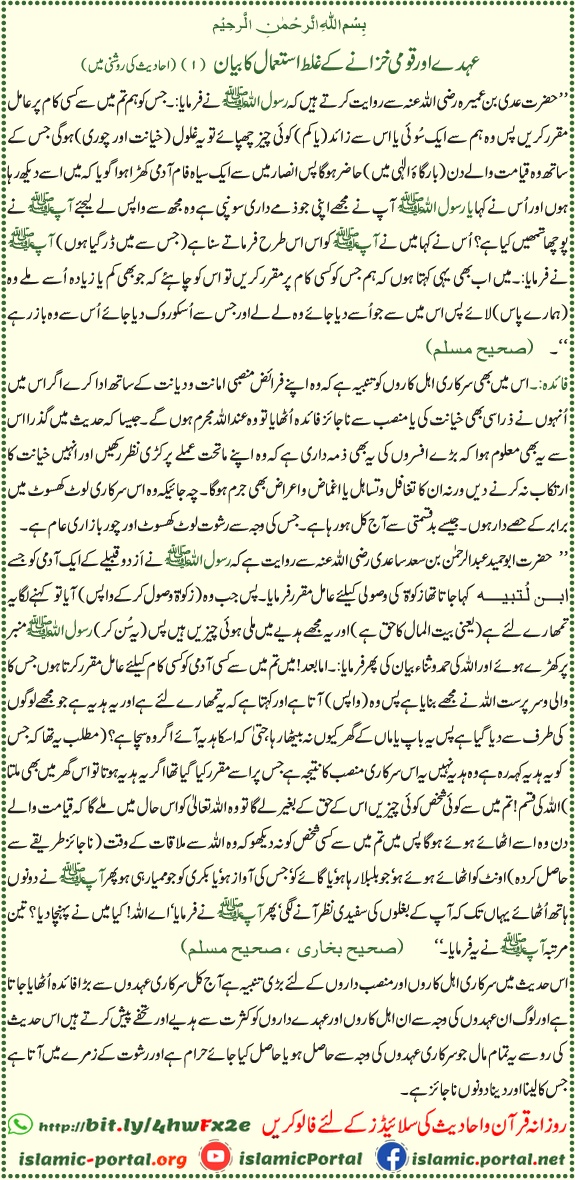
عہدے اور قومی خزانے کے غلط استعمال کا بیان (۱) (احادیث کی روشنی میں)

  • ”حضرت عدی بن عمیرہ رضی اللہ عنہ سے روایت ہے کہ رسول اللہ نے فرمایا : جس کو ہم تم میں سے کسی کام پر عامل مقرر کریں پس وہ ہم سے ایک سوئی یا اس سے زائد (یا کم) کوئی چیز چھپائے تو یہ غلول (خیانت اور چوری) ہوگی جس کے ساتھ وہ قیامت والے دن (بارگاہ الہی میں) حاضر ہو گا پس انصار میں سے ایک سیاہ فام آدمی کھڑا ہوا گویا کہ میں اسے دیکھ رہا ہوں اور اس نے کہا یا رسول اللہ آپ نے مجھے اپنی جو ذمے داری سونپی ہے وہ مجھ سے واپس لے لیجئے آپ نے پوچھا تمھیں کیا ہے؟ اس نے کہا میں نے آپ کو اس اس طرح فرماتے سنا ہے (جس سے میں ڈر گیا ہوں) آپ نے فرمایا :۔ میں اب بھی یہی کہتا ہوں کہ ہم جس کو کسی کام پر مقرر کریں تو اس کو چاہئے کہ جو بھی کم یا زیادہ اسے ملے وہ (ہمارے پاس) لائے پس اس میں سے جو اسے دیا جائے وہ لے لے اور جس سے اسکو روک دیا جائے اس سے وہ باز رہے “۔ (صحیح مسلم)

فائدہ :۔ اس میں بھی سرکاری اہل کاروں کو تنبیہ ہے کہ وہ اپنے فرائض منصبی امانت و دیانت کے ساتھ ادا کرے اگر اس میں انہوں نے ذراسی بھی خیانت کی یا منصب سے ناجائز فائدہ اٹھایا تو وہ عنداللہ مجرم ہوں گے۔ جیسا کہ حدیث میں گزرا اس سے یہ بھی معلوم ہوا کہ بڑے افسروں کی یہ بھی ذمہ داری ہے کہ وہ اپنے ماتحت عملے پر کڑی نظر رکھیں اور انہیں خیانت کا ارتکاب نہ کرنے دیں ورنہ ان کا تغافل و تساہل یا اغماض و اعراض بھی جرم ہوگا۔ چہ جائیکہ وہ اس سرکاری لوٹ کھسوٹ میں برابر کے حصے دار ہوں ۔ جیسے بد قسمتی سے آج کل ہو رہا ہے۔ جس کی وجہ سے رشوت لوٹ کھسوٹ اور چور بازاری عام ہے۔

  • ” حضرت ابوحمید عبدالرحمن بن سعد ساعدی رضی اللہ عنہ سے روایت ہے کہ رسول اللہ نے ازد و قبیلے کے ایک آدمی کو جسے ابن لُتْبِيَّہ کہا جاتا تھا زکوٰۃ کی وصولی کیلئے عامل مقرر فرمایا۔ پس جب وہ (زکوٰۃ وصول کر کے واپس) آیا تو کہنے لگا یہ تمہارے لئے ہے (یعنی بیت المال کا حق ہے) اور یہ مجھے ہدیے میں ملی ہوئی چیزیں ہیں پس (یہ سن کر) رسول اللہ منبر پر کھڑے ہوئے اور اللہ کی حمد و ثناء بیان کی پھر فرمایا :۔ اما بعد ! میں تم میں سے کسی آدمی کو کسی کام کیلئے عامل مقرر کرتا ہوں جس کا والی و سر پرست اللہ نے مجھے بنایا ہے پس وہ (واپس) آتا ہے اور کہتا ہے کہ یہ تمہارے لئے ہے اور یہ ہدیہ ہے جو مجھے لوگوں کی طرف سے دیا گیا ہے پس یہ باپ یا ماں کے گھر کیوں نہ بیٹھا رہا حتیٰ کہ اسکا ہدیہ آئے اگر وہ سچا ہے؟ (مطلب یہ تھا کہ جس کو یہ ہدیہ کہہ رہ ہے وہ ہدیہ نہیں یہ اس سرکاری منصب کا نتیجہ ہے جس پر اسے مقرر کیا گیا تھا اگر یہ ہدیہ ہوتا تو اس گھر میں بھی ملتا) اللہ کی قسم ! تم میں سے کوئی شخص کوئی چیز اس کے حق کے بغیر لے گا تو وہ اللہ تعالیٰ کو اس حال میں ملے گا کہ قیامت والے دن وہ اسے اٹھائے ہوئے ہو گا پس میں تم میں سے کسی شخص کو نہ دیکھو کہ وہ اللہ سے ملاقات کے وقت (ناجائز طریقے سے حاصل کردہ) اونٹ کو اٹھائے ہوئے ہو جو بلبلا رہا ہو یا گائے کو جس کی آواز ہو یا بکری کو جو ممیا رہی ہو پھر آپ نے دونوں ہاتھ اُٹھائے یہاں تک کہ آپ کے بغلوں کی سفیدی نظر آنے لگی پھر آپ نے فرمایا : اے اللہ ! کیا میں نے پہنچا دیا ؟ تین مرتبہ آپ نے فرمایا “۔ (صحیح بخاری ، صحیح مسلم)

اس حدیث میں سرکاری اہل کاروں اور منصب داروں کے لئے بڑی تنبیہ ہے آج کل سرکاری عہدوں سے بڑا فائدہ اٹھایا جاتا ہے اور لوگ ان عہدوں کی وجہ سے ان اہل کاروں اور عہدے داروں کو کثرت سے ہدیے اور تحفے پیش کرتے ہیں اس حدیث کی رو سے یہ تمام مال جو سرکاری عہدوں کی وجہ سے حاصل ہو یا حاصل کیا جائے حرام ہے اور رشوت کے زمرے میں آتا ہے جس کا لینا اور دینا دونوں ناجائز ہے۔

In the name of Allah, the Most Gracious, the Most Merciful

Misuse of Position and Public Treasury (1) (In the Light of Hadith)

“Hazrat ‘Adi bin ‘Umayrah (may Allah be pleased with him) narrates that the Messenger of Allah said: Whomever we appoint from among you over any task and he conceals from us even a needle or anything greater or lesser than it, then this is ghulul (betrayal and theft), and he will present himself with it on the Day of Resurrection. Then a dark-complexioned man from among the Ansar stood up—as if I can still see him—and said: O Messenger of Allah , take back the responsibility you assigned to me. He asked: What is the matter with you? He said: I heard you say such and such (and I became afraid). He said: I still say the same: Whomever we appoint over any task, he should bring whatever he receives, whether little or much; then whatever is given to him from it, he may take, and whatever he is prevented from, he must refrain from it.” (Sahih Muslim)

Benefit:
In this also there is a warning for government officials that they must perform their official duties with trustworthiness and integrity. If they commit even the slightest betrayal in it or take unlawful advantage from their position, they will be criminals in the sight of Allah. As mentioned in the hadith, it is also understood that senior officers bear the responsibility of keeping strict oversight over their subordinates and not allowing them to commit betrayal; otherwise their negligence, leniency, or disregard will also be a crime—let alone being equal partners in such public plunder, as unfortunately occurs today. Because of this, bribery, plunder, and corruption have become widespread.

“Hazrat Abu Humayd ‘Abd al-Rahman bin Sa‘d al-Sa‘idi (may Allah be pleased with him) narrates that the Messenger of Allah appointed a man from the tribe of Azd, known as Ibn al-Lutbiyyah, as a collector of zakat. When he returned (after collecting zakat), he said: This is for you (i.e., the right of the public treasury), and this was given to me as gifts. Upon hearing this, the Messenger of Allah stood upon the pulpit, praised and glorified Allah, and then said: As for what follows! I appoint one of you over a task over which Allah has made me its guardian, and then he returns and says: This is for you and this is a gift given to me by the people. Why did he not sit in the house of his father or mother until his gift came to him, if he is truthful? By Allah! None of you takes anything without its right except that he will meet Allah carrying it on the Day of Resurrection. So I should not see any one of you meeting Allah while carrying a camel that is bellowing, or a cow that is lowing, or a goat that is bleating.” Then he raised both his hands until the whiteness of his armpits became visible and said: O Allah, have I conveyed? He said it three times. (Sahih al-Bukhari, Sahih Muslim)

In this hadith there is a great warning for government officials and office holders. Nowadays great benefit is taken from official positions, and people frequently present gifts and offerings to such officials because of their positions. According to this hadith, all such wealth obtained or acquired due to official positions is unlawful and falls within the category of bribery; both taking it and giving it are impermissible.