
نماز کا مسنون طریقہ (۳)

اشاعت: 21-02-2026
شیئر کریں (صدقہ جاریہ):
Namaz ka masnoon tarika - Tashahud, dua aur salam ka sunnat tareeqa, Sahih Bukhari Muslim

بِسْمِ اللہِ الرَّحْمٰنِ الرَّحِیْمِ

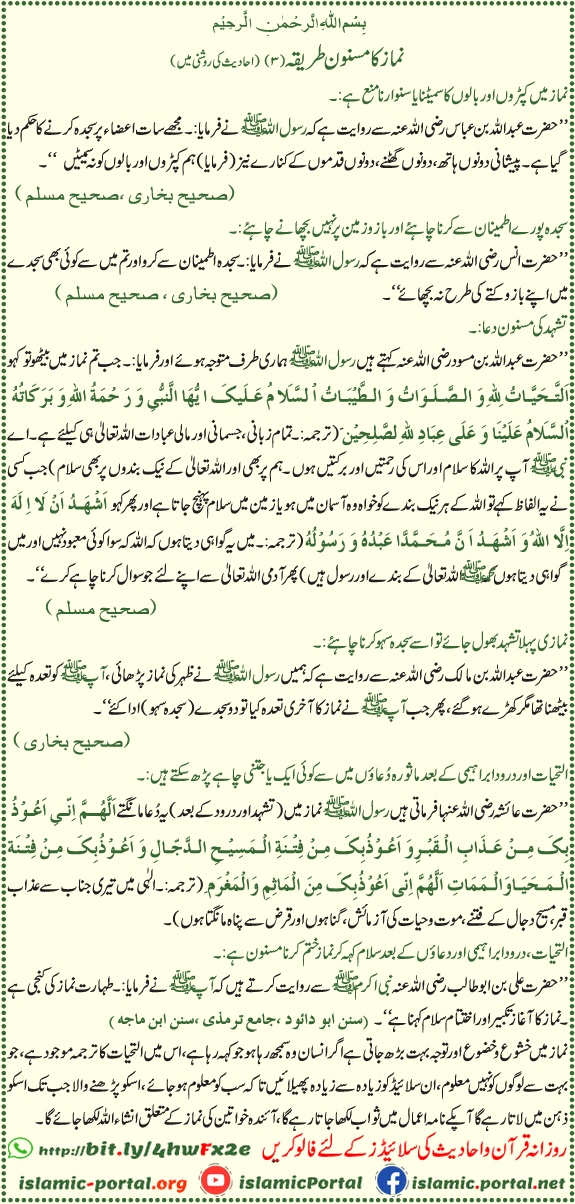
نماز کا مسنون طریقہ (۳) (احادیث کی روشنی میں)

نماز میں کپڑوں اور بالوں کا سمیٹنا یا سنوارنا منع ہے :-

  • ”حضرت عبداللہ بن عباس رضی اللہ عنہ سے روایت ہے کہ رسول اللہ نے فرمایا: مجھے سات اعضاء پر سجدہ کرنے کا حکم دیا گیا ہے۔ پیشانی، دونوں ہاتھ، دونوں گھٹنے، دونوں قدموں کے کنارے نیز (فرمایا) ہم کپڑوں اور بالوں کو نہ سمیٹیں“۔ (صحیح بخاری ، صحیح مسلم)

سجدہ پورے اطمینان سے کرنا چاہئے اور بازو زمین پر نہیں بچھانے چاہئے :-

  • ”حضرت انس رضی اللہ عنہ سے روایت ہے کہ رسول اللہ نے فرمایا: سجدہ اطمینان سے کرو اور تم میں سے کوئی بھی سجدے میں اپنے بازو کتے کی طرح نہ بچھائے“۔ (صحیح بخاری ، صحیح مسلم)

تشہد کی مسنون دعا :-

  • ”حضرت عبداللہ بن مسعود رضی اللہ عنہ کہتے ہیں رسول اللہ ہماری طرف متوجہ ہوئے اور فرمایا: جب تم نماز میں بیٹھو تو کہو اَلتَّحِيَّاتُ لِلّٰهِ وَ الصَّلَوَاتُ وَ الطَّيِّبَاتُ اَلسَّلَامُ عَلَيْكَ اَيُّهَا النَّبِيُّ وَ رَحْمَةُ اللّٰهِ وَ بَرَكَاتُهُ اَلسَّلَامُ عَلَيْنَا وَ عَلٰی عِبَادِ اللّٰهِ الصَّالِحِيْنَ (ترجمہ: تمام زبانی، جسمانی اور مالی عبادات اللہ تعالیٰ ہی کیلئے ہیں۔ اے نبی آپ پر اللہ کا سلام اور اس کی رحمتیں اور برکتیں ہوں۔ ہم پر بھی اور اللہ تعالیٰ کے نیک بندوں پر بھی سلام) جب کسی نے یہ الفاظ کہے تو اللہ کے ہر نیک بندے کو خواہ وہ آسمان میں ہو یا زمین میں سلام پہنچ جاتا ہے اور پھر کہو اَشْهَدُ اَنْ لَّا اِلٰهَ اِلَّا اللّٰهُ وَ اَشْهَدُ اَنَّ مُحَمَّدًا عَبْدُهُ وَ رَسُوْلُهُ (ترجمہ: میں یہ گواہی دیتا ہوں کہ اللہ کے سوا کوئی معبود نہیں اور میں گواہی دیتا ہوں کہ محمد اللہ تعالیٰ کے بندے اور رسول ہیں) پھر آدمی اللہ تعالیٰ سے اپنے لئے جو سوال کرنا چاہے کرے“۔ (صحیح مسلم)

نمازی پہلا تشہد بھول جائے تو اسے سجدہ سہو کرنا چاہئے :-

  • ”حضرت عبداللہ بن مالک رضی اللہ عنہ سے روایت ہے کہ ہمیں رسول اللہ نے ظہر کی نماز پڑھائی، آپ کو قعدہ کیلئے بیٹھنا تھا مگر کھڑے ہوگئے، پھر جب آپ نے نماز کا آخری قعدہ کیا تو دو سجدے (سجدہ سہو) ادا کئے“۔ (صحیح بخاری)

التحیات اور درود ابراہیمی کے بعد ماثورہ دعاؤں میں سے کوئی ایک یا جتنی چاہے پڑھ سکتے ہیں :-

  • ”حضرت عائشہ رضی اللہ عنہا فرماتی ہیں رسول اللہ نماز میں (تشہد اور درود کے بعد) یہ دعا مانگتے اَللّٰهُمَّ اِنِّيْ اَعُوْذُ بِكَ مِنْ عَذَابِ الْقَبْرِ وَ اَعُوْذُبِكَ مِنْ فِتْنَةِ الْمَسِيْحِ الدَّجَّالِ وَ اَعُوْذُبِكَ مِنْ فِتْنَةِ الْمَحْيَا وَالْمَمَاتِ اَللّٰهُمَّ اِنِّي اَعُوْذُبِكَ مِنَ الْمَأْثَمِ وَالْمَغْرَمِ (ترجمہ: الٰہی میں تیری جناب سے عذاب قبر، مسیح دجال کے فتنے، موت و حیات کی آزمائش، گناہوں اور قرض سے پناہ مانگتا ہوں)۔“

التحیات، درود ابراہیمی اور دعاؤں کے بعد سلام کہہ کر نماز ختم کرنا مسنون ہے :-

  • ”حضرت علی بن ابوطالب رضی اللہ عنہ سے روایت ہے کہ رسول اللہ نے فرمایا: طہارت نماز کی کنجی ہے نماز کا آغاز تکبیر اور اختتام سلام کہنا ہے“۔ (سنن ابو داؤد ، جامع ترمذی ، سنن ابن ماجہ)

نماز میں خشوع وخضوع اور توجہ بہت بڑھ جاتی ہے اگر انسان وہ سمجھ رہا ہو جو کہہ رہا ہے، اس میں التحیات کا ترجمہ موجود ہے، جو بہت سے لوگوں کو نہیں معلوم، ان سلائیڈز کو زیادہ سے زیادہ پھیلائیں تا کہ سب کو معلوم ہو جائے، اسکو پڑھنے والا جب تک اسکو ذہن میں لاتا رہے گا آپکے نامہ اعمال میں ثواب لکھا جاتا رہے گا، آئندہ خواتین کی نماز کے متعلق انشاء اللہ لکھا جائے گا۔

قرآن و احادیث کی تعلیمات کو تمام انسانوں تک پہنچانے میں ہمارا ساتھ دیں۔ جزاک اللہ ۔www.islamic-portal.org

In the name of Allah, the Most Gracious, the Most Merciful

The Prescribed Method of Prayer (3) (In the Light of Ḥadīth)

Gathering or arranging one’s clothing and hair during prayer is prohibited:

    ʿAbdullāh ibn ʿAbbās (may Allah be pleased with him) narrated that the Messenger of Allah said: “I have been commanded to prostrate upon seven bones: the forehead, the two hands, the two knees, and the edges of the two feet; and that we should not gather up our garments or hair.”
    (Ṣaḥīḥ al-Bukhārī, Ṣaḥīḥ Muslim)

Prostration should be performed with full composure, and the arms should not be spread upon the ground:

    Anas (may Allah be pleased with him) narrated that the Messenger of Allah said: “Perform the prostration with composure, and none of you should spread his arms on the ground like a dog.”
    (Ṣaḥīḥ al-Bukhārī, Ṣaḥīḥ Muslim)

The Prescribed Supplication of Tashahhud:

    ʿAbdullāh ibn Masʿūd (may Allah be pleased with him) said that the Messenger of Allah turned toward us and said: “When one of you sits in prayer, let him say:
    Al-taḥiyyātu liLlāhi wa-al-ṣalawātu wa-al-ṭayyibāt, al-salāmu ʿalayka ayyuhā al-nabiyyu wa-raḥmatu Allāhi wa-barakātuh, al-salāmu ʿalaynā wa-ʿalā ʿibādi Allāhi al-ṣāliḥīn
    (All verbal, physical, and financial acts of worship are for Allah alone. O Prophet, peace be upon you, and the mercy of Allah and His blessings. Peace be upon us and upon the righteous servants of Allah.)
    When a person says these words, the greeting reaches every righteous servant of Allah, whether in the heavens or on the earth. Then he should say:
    Ashhadu an lā ilāha illā Allāh wa-ashhadu anna Muḥammadan ʿabduhu wa-rasūluh
    (I bear witness that there is no deity except Allah, and I bear witness that Muḥammad is His servant and Messenger.)
    Then let him supplicate to Allah with whatever he wishes.”
    (Ṣaḥīḥ Muslim)

If a worshipper forgets the first tashahhud, he should perform sujūd al-sahw:

    ʿAbdullāh ibn Mālik (may Allah be pleased with him) narrated that the Messenger of Allah led us in the ẓuhr prayer. He was to sit for the qaʿdah but stood up instead. Then, when he performed the final qaʿdah of the prayer, he performed two prostrations (of forgetfulness).
    (Ṣaḥīḥ al-Bukhārī)

After al-taḥiyyāt and al-ṣalāh al-Ibrāhīmiyyah, one may recite any of the transmitted supplications:

    ʿĀʾishah (may Allah be pleased with her) said that the Messenger of Allah would supplicate in prayer (after tashahhud and ṣalāh upon the Prophet):
    Allāhumma innī aʿūdhu bika min ʿadhābi al-qabr, wa-aʿūdhu bika min fitnati al-masīḥ al-dajjāl, wa-aʿūdhu bika min fitnati al-maḥyā wa-al-mamāt, Allāhumma innī aʿūdhu bika min al-maʾthami wa-al-maghram
    (O Allah, I seek refuge in You from the punishment of the grave; I seek refuge in You from the trial of al-Masīḥ al-Dajjāl; I seek refuge in You from the trials of life and death; O Allah, I seek refuge in You from sin and debt.)

After al-taḥiyyāt, al-ṣalāh al-Ibrāhīmiyyah, and the supplications, it is sunnah to conclude the prayer by saying salām:

    ʿAlī ibn Abī Ṭālib (may Allah be pleased with him) narrated that the Messenger of Allah said: “Purification is the key to prayer; its beginning is the takbīr and its ending is the salām.”
    (Sunan Abī Dāwūd, Jāmiʿ al-Tirmidhī, Sunan Ibn Mājah)

Khushūʿ (humility) and attentiveness in prayer greatly increase when a person understands what he is reciting. The translation of al-taḥiyyāt has been included here, which many people do not know. These slides should be widely disseminated so that all may become aware. As long as the one who reads this brings it to mind, reward will continue to be recorded in your book of deeds. In shāʾ Allāh, the prayer of women will be discussed in the future.