
نماز کا مسنون طریقہ (۱)

اشاعت: 21-02-2026
شیئر کریں (صدقہ جاریہ):
Namaz ka masnoon tarika - Takbeer se ruku sajood tak sunnat ka bayan, Sahih Bukhari Muslim

بِسْمِ اللہِ الرَّحْمٰنِ الرَّحِیْمِ

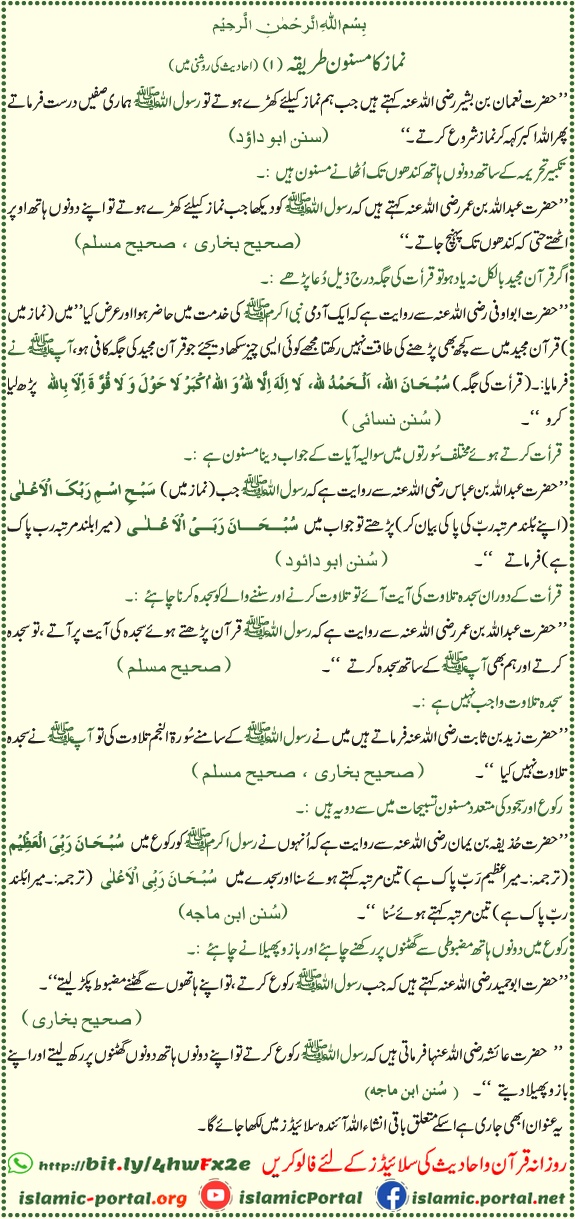
نماز کا مسنون طریقہ (۱) (احادیث کی روشنی میں)

  • ”حضرت نعمان بن بشیر رضی اللہ عنہ کہتے ہیں جب ہم نماز کیلئے کھڑے ہوتے تو رسول اللہ ہماری صفیں درست فرماتے پھر اللہ اکبر کہہ کر نماز شروع کرتے“۔ (سنن ابو داؤد)

تکبیر تحریمہ کے ساتھ دونوں ہاتھ کندھوں تک اٹھانے مسنون ہیں :-

  • ”حضرت عبداللہ بن عمر رضی اللہ عنہ کہتے ہیں کہ رسول اللہ کو دیکھا جب نماز کیلئے کھڑے ہوتے تو اپنے دونوں ہاتھ اوپر اٹھاتے حتی کہ کندھوں تک پہنچ جاتے“۔ (صحیح بخاری ، صحیح مسلم)

اگر قرآن مجید بالکل نہ یاد ہو تو قرأت کی جگہ درج ذیل دُعا پڑھے :-

  • ”حضرت ابواوفی رضی اللہ عنہ سے روایت ہے کہ ایک آدمی نبی اکرم کی خدمت میں حاضر ہوا اور عرض کیا ”میں (نماز میں) قرآن مجید میں سے کچھ بھی پڑھنے کی طاقت نہیں رکھتا مجھے کوئی ایسی چیز سکھا دیجئے جو قرآن مجید کی جگہ کافی ہو، آپ نے فرمایا:۔ (قرأت کی جگہ) سُبْحَانَ اللہِ، اَلْحَمْدُ لِلہِ، لَا اِلٰہَ اِلَّا اللہُ وَ اللہُ اَکْبَرُ لَا حَوْلَ وَ لَا قُوَّةَ اِلَّا بِاللہِ پڑھ لیا کرو“۔ (سنن نسائی)

قرأت کرتے ہوئے مختلف سورتوں میں سوالیہ آیات کے جواب دینا مسنون ہے :-

  • ”حضرت عبداللہ بن عباس رضی اللہ عنہ سے روایت ہے کہ رسول اللہ جب (نماز میں) سَبِّحِ اسْمَ رَبِّکَ الْاَعْلَی (اپنے بلند مرتبہ رب کی پاکی بیان کر) پڑھتے تو جواب میں سُبْحَانَ رَبِّیَ الْاَعْلٰی (میرا بلند مرتبہ رب پاک ہے) فرماتے“۔ (سنن ابو داؤد)

قرأت کے دوران سجدہ تلاوت کی آیت آئے تو تلاوت کرنے اور سننے والے کو سجدہ کرنا چاہئے :-

  • ”حضرت عبداللہ بن عمر رضی اللہ عنہ سے روایت ہے کہ رسول اللہ قرآن پڑھتے ہوئے سجدے کی آیت پر آتے، تو سجدہ کرتے اور ہم بھی آپ کے ساتھ سجدہ کرتے“۔ (صحیح مسلم)

سجدہ تلاوت واجب نہیں ہے :-

  • ”حضرت زید بن ثابت رضی اللہ عنہ فرماتے ہیں میں نے رسول اللہ کے سامنے سورۃ النجم تلاوت کی تو آپ نے سجدہ تلاوت نہیں کیا“۔ (صحیح بخاری ، صحیح مسلم)

رکوع اور سجود کی متعدد مسنون تسبیحات میں سے دو یہ ہیں :-

  • ”حضرت حذیفہ بن یمان رضی اللہ عنہ سے روایت ہے کہ انہوں نے رسول اکرم کو رکوع میں سُبْحَانَ رَبِّیَ الْعَظِیْمِ (ترجمہ: میرا عظیم رب پاک ہے) تین مرتبہ کہتے ہوئے سنا اور سجدے میں سُبْحَانَ رَبِّیَ الْاَعْلَی (ترجمہ: میرا بلند رب پاک ہے) تین مرتبہ کہتے سنا“۔ (سنن ابن ماجہ)

رکوع میں دونوں ہاتھ مضبوطی سے گھٹنوں پر رکھنے چاہئے اور بازو پھیلا نے چاہئے :-

  • ”حضرت ابوحمید رضی اللہ عنہ کہتے ہیں کہ جب رسول اللہ رکوع کرتے، تو اپنے ہاتھوں سے گھٹنے مضبوط پکڑ لیتے“۔ (صحیح بخاری)

  • ”حضرت عائشہ رضی اللہ عنہا فرماتی ہیں کہ رسول اللہ رکوع کرتے تو اپنے دونوں ہاتھوں گھٹنوں پر رکھ لیتے اور اپنے بازو پھیلا دیتے“۔ (سنن ابن ماجہ)

قرآن و احادیث کی تعلیمات کو تمام انسانوں تک پہنچانے میں ہمارا ساتھ دیں۔ جزاک اللہ ۔www.islamic-portal.org

In the name of Allah, the Most Gracious, the Most Merciful

The Prescribed Method of Prayer (1) (In the Light of Ḥadīth)


When we would stand for prayer, the Messenger of Allah would straighten our rows and then begin the prayer by saying “Allāhu Akbar.”
(Sunan Abī Dāwūd)

Raising both hands up to the shoulders with the opening takbīr is sunnah:

ʿAbdullāh ibn ʿUmar (may Allah be pleased with him) said that he saw the Messenger of Allah , when he stood for prayer, raise both his hands until they reached his shoulders.
(Ṣaḥīḥ al-Bukhārī, Ṣaḥīḥ Muslim)

If one has not memorized any part of the Noble Qur’an, the following supplication may be recited in place of the recitation:

Abū Awfā (may Allah be pleased with him) narrated that a man came to the Messenger of Allah and said: “I am unable to recite anything from the Qur’an in prayer; teach me something that will suffice in its place.” He said: “Recite: Subḥāna Allāh, al-ḥamdu liLlāh, lā ilāha illā Allāh, Allāhu akbar, lā ḥawla wa lā quwwata illā biLlāh.”
(Sunan al-Nasāʾī)

Responding to interrogative verses in different sūrahs during recitation is sunnah:

ʿAbdullāh ibn ʿAbbās (may Allah be pleased with him) narrated that when the Messenger of Allah recited “Sabbihi isma rabbika al-aʿlā,” he would respond by saying, “Subḥāna rabbīya al-aʿlā.”
(Sunan Abī Dāwūd)

If a verse of prostration is encountered during recitation, the reciter and the listener should perform prostration:

ʿAbdullāh ibn ʿUmar (may Allah be pleased with him) narrated that when the Messenger of Allah recited the Qur’an and came to a verse of prostration, he would prostrate, and we would also prostrate with him.
(Ṣaḥīḥ Muslim)

Prostration of recitation is not obligatory:

Zayd ibn Thābit (may Allah be pleased with him) said: I recited Sūrat al-Najm before the Messenger of Allah and he did not perform the prostration of recitation.
(Ṣaḥīḥ al-Bukhārī, Ṣaḥīḥ Muslim)

Among the many prescribed tasbīḥāt for rukūʿ and sujūd, the following two are reported:

Ḥudhayfah ibn al-Yamān (may Allah be pleased with him) narrated that he heard the Messenger of Allah say in rukūʿ three times, “Subḥāna rabbīya al-ʿaẓīm” (Glory be to my Lord, the Magnificent), and in sujūd three times, “Subḥāna rabbīya al-aʿlā” (Glory be to my Lord, the Most High).
(Sunan Ibn Mājah)

In rukūʿ, both hands should be placed firmly upon the knees and the arms spread:

Abū Ḥumayd (may Allah be pleased with him) narrated that when the Messenger of Allah performed rukūʿ, he would firmly grasp his knees with his hands.
(Ṣaḥīḥ al-Bukhārī)

ʿĀʾishah (may Allah be pleased with her) said that when the Messenger of Allah performed rukūʿ, he would place both his hands upon his knees and spread his arms.
(Sunan Ibn Mājah)

Assist us in conveying the teachings of the Qur’an and ḥadīth to all humanity. May Allah reward you.
www.islamic-portal.org