بِسْمِ اللّٰهِ الرَّحْمٰنِ الرَّحِيْمِ
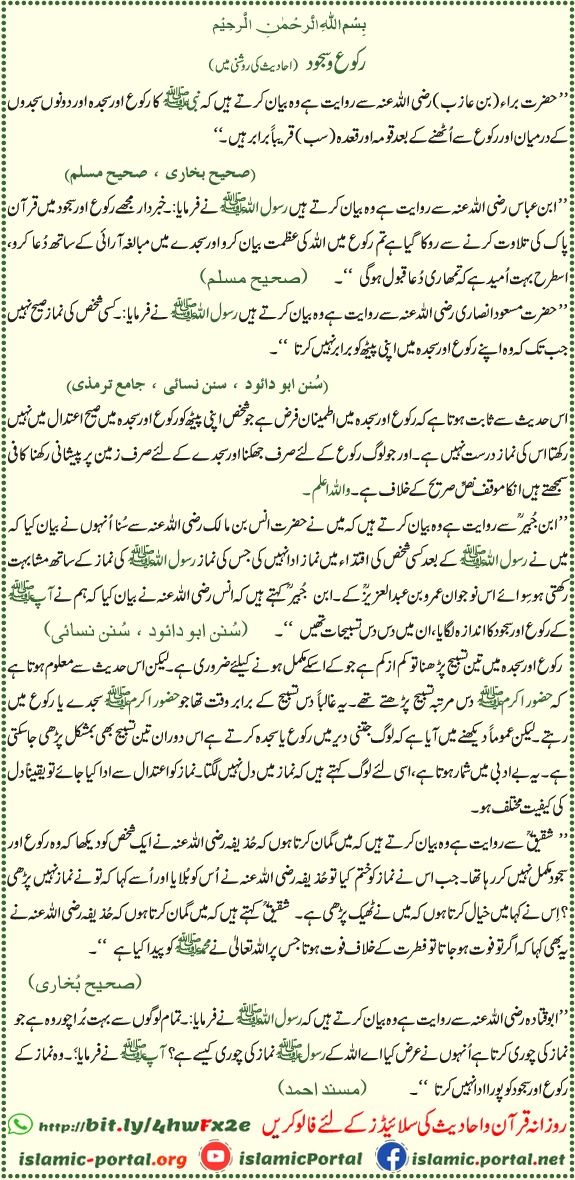
رکوع و سجود (احادیث کی روشنی میں)
-
”حضرت براء (بن عازب) رضی اللہ عنہ سے روایت ہے وہ بیان کرتے ہیں کہ نبی ﷺ کا رکوع اور سجدہ اور دونوں سجدوں کے درمیان اور رکوع سے اٹھنے کے بعد قومہ اور قعدہ (سب) قریباً برابر ہیں“۔ (صحیح بخاری ، صحیح مسلم)
-
”ابن عباس رضی اللہ عنہ سے روایت ہے وہ بیان کرتے ہیں رسول اللہ ﷺ نے فرمایا: خبردار مجھے رکوع اور سجود میں قرآن پاک کی تلاوت کرنے سے روکا گیا ہے تم رکوع میں اللہ کی عظمت بیان کرو اور سجدے میں مبالغہ آرائی کے ساتھ دُعا کرو، اسطرح بہت اُمید ہے کہ تمہاری دُعا قبول ہوگی“۔ (صحیح مسلم)
-
”حضرت مسعود انصاری رضی اللہ عنہ سے روایت ہے وہ بیان کرتے ہیں رسول اللہ ﷺ نے فرمایا: کسی شخص کی نماز صحیح نہیں جب تک کہ وہ اپنے رکوع اور سجدہ میں اپنی پیٹھ کو برابر نہیں کرتا“۔ (سُنن ابو دائود ، سُنن نسائی ، جامع ترمذی)
اس حدیث سے ثابت ہوتا ہے کہ رکوع اور سجدہ میں اطمینان فرض ہے جو شخص اپنی پیٹھ کو رکوع اور سجدہ میں صحیح اعتدال میں نہیں رکھتا اس کی نماز درست نہیں ہے۔ اور جو لوگ رکوع کے لئے صرف جھکنا اور سجدے کے لئے صرف زمین پر پیشانی رکھنا کافی سمجھتے ہیں ان کا موقف نصِ صریح کے خلاف ہے۔ واللہ اعلم۔
رکوع اور سجدہ میں تین تسبیح پڑھنا تو کم از کم ہے جو کے اسکے مکمل ہونے کیلئے ضروری ہے۔ لیکن اس حدیث سے معلوم ہوتا ہے کہ حضور اکرم ﷺ دس مرتبہ تسبیح پڑھتے تھے۔ یہ غالباً دس تسبیح کے برابر وقت تھا جو حضور اکرم ﷺ سجدے یا رکوع میں رہتے۔ لیکن عموماً دیکھنے میں آیا ہے کہ لوگ جتنی دیر میں رکوع یا سجدہ کرتے ہے اس دوران تین تسبیح بھی بمشکل پڑھی جاسکتی ہے۔ یہ بے ادبی میں شمار ہوتا ہے، اسی لئے لوگ کہتے ہیں کہ نماز میں دل نہیں لگتا۔ نماز کو اعتدال سے ادا کیا جائے تو یقیناً دل کی کیفیت مختلف ہو۔
-
”شقیق سے روایت ہے وہ بیان کرتے ہیں کہ میں گمان کرتا ہوں کہ حذیفہ رضی اللہ عنہ نے ایک شخص کو دیکھا کہ وہ رکوع اور سجود مکمل نہیں کر رہا تھا۔ جب اس نے نماز کو ختم کیا تو حذیفہ رضی اللہ عنہ نے اُس کو بلایا اور اُسے کہا کہ تو نے نماز نہیں پڑھی؟ اُس نے کہا میں خیال کرتا ہوں کہ میں نے ٹھیک پڑھی ہے۔ شقیق کہتے ہیں کہ میں گمان کرتا ہوں کہ حذیفہ رضی اللہ عنہ نے یہ بھی کہا کہ اگر تو فوت ہو جاتا تو فطرت کے خلاف فوت ہوتا جس پر اللہ تعالیٰ نے محمد ﷺ کو پیدا کیا ہے“۔ (صحیح بخاری)
-
”ابو قتادہ رضی اللہ عنہ سے روایت ہے وہ بیان کرتے ہیں کہ رسول اللہ ﷺ نے فرمایا: تمام لوگوں سے بہت بُرا چور وہ ہے جو نماز کی چوری کرتا ہے اُنہوں نے عرض کیا اے اللہ کے رسول ﷺ نماز کی چوری کیسے ہے؟ آپ ﷺ نے فرمایا: وہ نماز کے رکوع اور سجود کو پورا ادا نہیں کرتا“۔ (مسند احمد)
قرآن و احادیث کی تعلیمات کو تمام انسانوں تک پہنچانے میں ہمارا ساتھ دیں۔ جزاک اللہ۔ www.islamic-portal.org
English Translation
In the name of Allah, the Most Gracious, the Most Merciful
Rukūʿ and Sujūd (In the Light of Ḥadīth)
Ḥaḍrat al-Barāʾ ibn ʿĀzib (may Allah be pleased with him) narrated that the rukūʿ and sujūd of the Prophet ﷺ, the sitting between the two prostrations, the standing after rising from rukūʿ (qawmah), and the sitting (qaʿdah) were all nearly equal in duration.
(Ṣaḥīḥ al-Bukhārī, Ṣaḥīḥ Muslim)
Ibn ʿAbbās (may Allah be pleased with him) narrated that the Messenger of Allah ﷺ said: “Behold, I have been prohibited from reciting the Noble Qur’an in rukūʿ and sujūd. Therefore, in rukūʿ, proclaim the greatness of Allah, and in sujūd, exert yourselves abundantly in supplication; thus, it is most likely that your supplication will be accepted.”
(Ṣaḥīḥ Muslim)
Ḥaḍrat Masʿūd al-Anṣārī (may Allah be pleased with him) narrated that the Messenger of Allah ﷺ said: “The prayer of a person is not valid until he straightens his back properly in rukūʿ and sujūd.”
(Sunan Abī Dāwūd, Sunan al-Nasāʾī, Jāmiʿ al-Tirmidhī)
From this ḥadīth it is established that composure (iṭmiʾnān) in rukūʿ and sujūd is obligatory. Whoever does not maintain proper balance and straightness of the back in rukūʿ and sujūd, his prayer is not valid. Those who consider merely bending for rukūʿ and merely placing the forehead on the ground for sujūd to be sufficient are in opposition to explicit textual evidence. And Allah knows best.
Ibn Bujayr narrated that he heard Ḥaḍrat Anas ibn Mālik (may Allah be pleased with him) say: “After the Messenger of Allah ﷺ, I did not perform prayer behind anyone whose prayer resembled that of the Messenger of Allah ﷺ except this young man, ʿUmar ibn ʿAbd al-ʿAzīz.” Ibn Bujayr said that Anas (may Allah be pleased with him) stated: “We estimated the duration of his rukūʿ and sujūd, and in them there were ten tasbīḥāt.”
(Sunan Abī Dāwūd, Sunan al-Nasāʾī)
Reciting three tasbīḥāt in rukūʿ and sujūd is the minimum required for their completion. However, from this ḥadīth it is known that the Noble Messenger ﷺ would recite tasbīḥ ten times. This was likely equivalent to the duration in which ten tasbīḥāt could be recited while he ﷺ remained in rukūʿ or sujūd. Yet it is commonly observed that during the time people spend in rukūʿ or sujūd, even three tasbīḥāt can scarcely be completed. This falls under disrespect. For this reason, people often say that they do not find concentration in prayer. If prayer is performed with proper balance and composure, the state of the heart will certainly be different.
Shakīq narrated that he thought Ḥudhayfah (may Allah be pleased with him) saw a man who was not completing his rukūʿ and sujūd properly. When he finished the prayer, Ḥudhayfah (may Allah be pleased with him) called him and said: “You have not prayed.” The man replied: “I think I prayed correctly.” Shakīq said that he thought Ḥudhayfah (may Allah be pleased with him) also said: “If you were to die in this state, you would die upon other than the fiṭrah upon which Allah created Muḥammad ﷺ.”
(Ṣaḥīḥ al-Bukhārī)
Abū Qatādah (may Allah be pleased with him) narrated that the Messenger of Allah ﷺ said: “The worst thief among the people is the one who steals from his prayer.” They asked: “O Messenger of Allah, how does one steal from his prayer?” He ﷺ said: “He does not complete its rukūʿ and sujūd.”
(Musnad Aḥmad)