
سُنتوں اور نوافل کی فضیلت

اشاعت: 21-02-2026
شیئر کریں (صدقہ جاریہ):
Sunnat nawafil fazilat hadith - Nafl aur sunnat namazon ke ajar ka bayan, Sahih Bukhari Tirmizi

بِسْمِ اللّٰهِ الرَّحْمٰنِ الرَّحِيْمِ

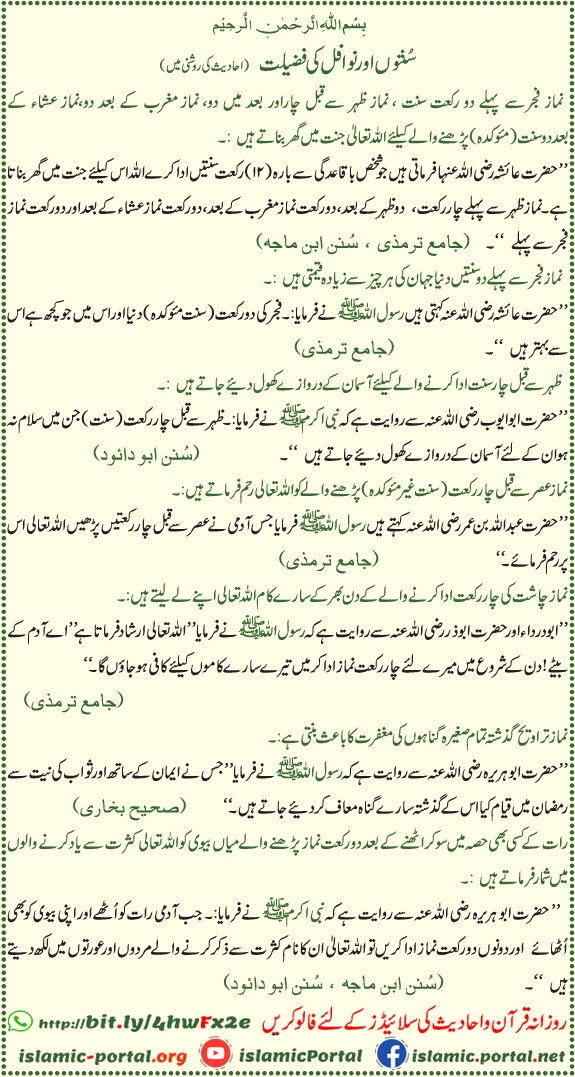
سُنتوں اور نوافل کی فضیلت (احادیث کی روشنی میں)

نماز فجر سے پہلے دو رکعت سنت، نماز ظہر سے قبل چار اور بعد میں دو، نماز مغرب کے بعد دو، نماز عشاء کے بعد دو سنت (مؤکدہ) پڑھنے والے کیلئے اللہ تعالیٰ جنت میں گھر بناتے ہیں :۔

  • ”حضرت عائشہ رضی اللہ عنہا فرماتی ہیں جو شخص باقاعدگی سے بارہ (۱۲) رکعت سنتیں ادا کرے اللہ اس کیلئے جنت میں گھر بناتا ہے۔ نماز ظہر سے پہلے چار رکعت، دو ظہر کے بعد، دو رکعت نماز مغرب کے بعد، دو رکعت نماز عشاء کے بعد اور دو رکعت نماز فجر سے پہلے “ ۔ (جامع ترمذی ، سُنن ابن ماجہ)

نماز فجر سے پہلے دو سنتیں دنیا جہان کی ہر چیز سے زیادہ قیمتی ہیں :۔

  • ”حضرت عائشہ رضی اللہ عنہا کہتی ہیں رسول اللہ نے فرمایا :۔ فجر کی دو رکعت (سنت مؤکدہ) دنیا اور اس میں جو کچھ ہے اس سے بہتر ہیں “ ۔ (جامع ترمذی)

ظہر سے قبل چار سنت ادا کرنے والے کیلئے آسمان کے دروازے کھول دیئے جاتے ہیں :۔

  • ”حضرت ابوایوب رضی اللہ عنہ سے روایت ہے کہ نبی اکرم نے فرمایا :۔ ظہر سے قبل چار رکعت (سنت) جن میں سلام نہ ہو ان کے لئے آسمان کے دروازے کھول دیئے جاتے ہیں “ ۔ (سُنن ابو داؤد)

نماز عصر سے قبل چار رکعت (سنت غیر مؤکدہ) پڑھنے والے کو اللہ تعالیٰ رحم فرماتے ہیں :۔

  • ”حضرت عبداللہ بن عمر رضی اللہ عنہ کہتے ہیں رسول اللہ نے فرمایا جس آدمی نے عصر سے قبل چار رکعتیں پڑھیں اللہ تعالیٰ اس پر رحم فرمائے ۔“ (جامع ترمذی)

نماز چاشت کی چار رکعت ادا کرنے والے کے دن بھر کے سارے کام اللہ تعالیٰ اپنے لے لیتے ہیں :۔

  • ”ابو درداء اور حضرت ابوذر رضی اللہ عنہما سے روایت ہے کہ رسول اللہ نے فرمایا ’اللہ تعالیٰ ارشاد فرماتا ہے ’اے آدم کے بیٹے ! دن کے شروع میں میرے لئے چار رکعت نماز ادا کر میں تیرے سارے کاموں کیلئے کافی ہو جاؤں گا ۔‘ “ (جامع ترمذی)

نماز تراویح گذشتہ تمام صغیرہ گناہوں کی مغفرت کا باعث بنتی ہے :۔

  • ”حضرت ابوہریرہ رضی اللہ عنہ سے روایت ہے کہ رسول اللہ نے فرمایا ’جس نے ایمان کے ساتھ اور ثواب کی نیت سے رمضان میں قیام کیا اس کے گذشتہ سارے گناہ معاف کر دیئے جاتے ہیں ۔‘ “ (صحیح بخاری)

رات کے کسی بھی حصہ میں سو کر اٹھنے کے بعد دو رکعت نماز پڑھنے والے میاں بیوی کو اللہ تعالیٰ کثرت سے یاد کرنے والوں میں شمار فرماتے ہیں :۔

  • ”حضرت ابوہریرہ رضی اللہ عنہ سے روایت ہے کہ نبی اکرم نے فرمایا :۔ جب آدمی رات کو اُٹھے اور اپنی بیوی کو بھی اُٹھائے اور دونوں دو رکعت نماز ادا کریں تو اللہ تعالیٰ ان کا نام کثرت سے ذکر کرنے والے مردوں اور عورتوں میں لکھ دیتے ہیں “ ۔ (سُنن ابو داؤد ، سُنن ابن ماجہ)

In the name of Allah, the Most Gracious, the Most Merciful

The Virtue of Sunnah and Voluntary Prayers (In the Light of Ḥadīth)

For the one who performs two rakʿahs of sunnah before the fajr prayer, four before ẓuhr and two after it, two after maghrib, and two after ʿishāʾ (sunnah muʾakkadah), Allah prepares a house for him in Paradise:

    ʿĀʾishah (may Allah be pleased with her) said: “Whoever regularly performs twelve rakʿahs of sunnah prayers, Allah builds a house for him in Paradise: four rakʿahs before ẓuhr, two after ẓuhr, two after maghrib, two after ʿishāʾ, and two before fajr.”
    (Jāmiʿ al-Tirmidhī, Sunan Ibn Mājah)

The two sunnah rakʿahs before the fajr prayer are more valuable than the world and all that it contains:

    ʿĀʾishah (may Allah be pleased with her) said that the Messenger of Allah said: “The two rakʿahs before fajr are better than the world and all that it contains.”
    (Jāmiʿ al-Tirmidhī)

For the one who performs four sunnah rakʿahs before ẓuhr, the gates of heaven are opened:

    Abū Ayyūb (may Allah be pleased with him) narrated that the Prophet said: “For four rakʿahs before ẓuhr, in which there is no salām (between them), the gates of heaven are opened.”
    (Sunan Abī Dāwūd)

Allah shows mercy to the one who performs four rakʿahs (sunnah ghayr muʾakkadah) before the ʿaṣr prayer:

    ʿAbdullāh ibn ʿUmar (may Allah be pleased with him) said that the Messenger of Allah said: “May Allah have mercy on the person who performs four rakʿahs before ʿaṣr.”
    (Jāmiʿ al-Tirmidhī)

For the one who performs four rakʿahs of the ḍuḥā prayer, Allah suffices him for all his affairs throughout the day:

    Abū al-Dardāʾ and Abū Dharr (may Allah be pleased with them both) narrated that the Messenger of Allah said: “Allah says: ‘O son of Ādam, perform four rakʿahs for Me at the beginning of the day, and I shall suffice you for the rest of it.’”
    (Jāmiʿ al-Tirmidhī)

The prayer of tarāwīḥ becomes a means of forgiveness for past minor sins:

    Abū Hurayrah (may Allah be pleased with him) narrated that the Messenger of Allah said: “Whoever stands in prayer during Ramaḍān with faith and seeking reward, his previous sins are forgiven.”
    (Ṣaḥīḥ al-Bukhārī)

A husband and wife who rise after sleeping at any part of the night and perform two rakʿahs of prayer are recorded among those who remember Allah abundantly:

    Abū Hurayrah (may Allah be pleased with him) narrated that the Prophet said: “When a man rises at night and awakens his wife, and they perform two rakʿahs together, Allah records them among the men and women who remember Him abundantly.”
    (Sunan Abī Dāwūd, Sunan Ibn Mājah)