بِسْمِ اللہِ الرَّحْمٰنِ الرَّحِیْمِ
ترک نماز (احادیث کی روشنی میں)
-
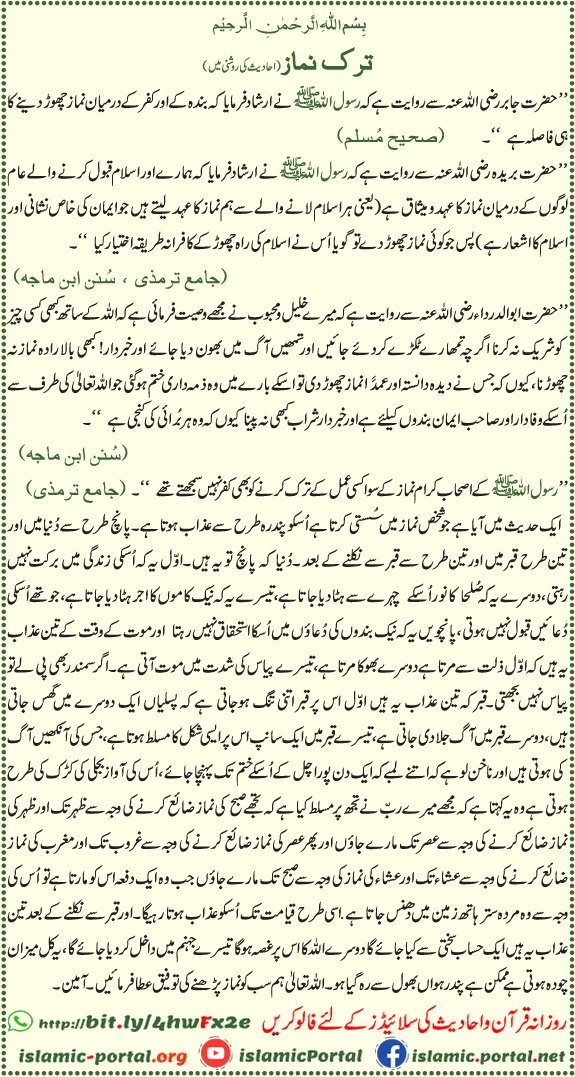
”حضرت جابر رضی اللہ عنہ سے روایت ہے کہ رسول اللہ ﷺ نے ارشاد فرمایا کہ بندہ کے اور کفر کے درمیان نماز چھوڑ دینے کا ہی فاصلہ ہے“۔ (صحیح مسلم)
-
”حضرت بریدہ رضی اللہ عنہ سے روایت ہے کہ رسول اللہ ﷺ نے ارشاد فرمایا کہ ہمارے اور اسلام قبول کرنے والے عام لوگوں کے درمیان نماز کا عہد و میثاق ہے (یعنی ہر اسلام لانے والے سے ہم نماز کا عہد لیتے ہیں جو ایمان کی خاص نشانی اور اسلام کا شعار ہے) پس جو کوئی نماز چھوڑ دے تو گویا اس نے اسلام کی راہ چھوڑ کر کفر کا طریقہ اختیار کیا“۔ (جامع ترمذی ، سنن ابن ماجہ)
-
”حضرت ابو الدرداء رضی اللہ عنہ کہتے ہیں کہ میرے خلیل و محبوب نے مجھے وصیت فرمائی ہے کہ اللہ کے ساتھ کبھی کسی چیز کو شریک نہ کرنا اگرچہ تمہارے ٹکڑے کر دئیے جائیں اور تمھیں آگ میں بھون دیا جائے اور خبردار! کبھی بالا ارادہ نماز نہ چھوڑنا، کیوں کہ جس نے دیدہ دانستہ اور عمدًا نماز چھوڑی تو اسکے بارے میں وہ ذمہ داری ختم ہوگئی جو اللہ تعالیٰ کی طرف سے اُسکے وفادار اور صاحب ایمان بندوں کیلئے ہے اور خبردار شراب کبھی نہ پینا کیوں کہ وہ ہر بُرائی کی کنجی ہے“۔ (سنن ابن ماجہ)
-
”رسول اللہ ﷺ کے اصحاب کرام نماز کے سوا کسی عمل کے ترک کرنے کو بھی کفر نہیں سمجھتے تھے“۔ (جامع ترمذی)
ایک حدیث میں آیا ہے جو شخص نماز میں سستی کرتا ہے اُسکو پندرہ طرح سے عذاب ہوتا ہے۔ پانچ طرح سے دُنیا میں اور تین طرح قبر میں اور تین طرح سے قبر سے نکلنے کے بعد۔ دُنیا کہ پانچ تو یہ ہیں۔ اوّل یہ کہ اُسکی زندگی میں برکت نہیں رہتی، دوسرے یہ کہ صلحا کا نور اُسکے چہرے سے ہٹا دیا جاتا ہے، تیسرے یہ کہ نیک کاموں کا اجر ہٹا دیا جاتا ہے، چوتھے اُسکی دُعائیں قبول نہیں ہوتی، پانچویں یہ کہ نیک بندوں کی دُعاؤں میں اُسکا استحقاق نہیں رہتا اور موت کے وقت کے تین عذاب یہ ہیں کہ اوّل ذلت سے مرتا ہے، دوسرے بھوکا مرتا ہے، تیسرے پیاس کی شدت میں موت آتی ہے۔ اگر سمندر بھی پی لے تو پیاس نہیں بجھتی۔ قبر کہ تین عذاب یہ ہیں اوّل اس پر قبر اتنی تنگ ہو جاتی ہے کہ پسلیاں ایک دوسرے میں گھس جاتی ہیں، دوسرے قبر میں آگ جلا دی جاتی ہے، تیسرے قبر میں ایک سانپ اس پر ایسی شکل کا مسلط ہوتا ہے، جس کی آنکھیں آگ کی ہوتی ہیں اور ناخن لوہے کہ اتنے لمبے کہ ایک دن پورا چل کے اُسکے ختم تک پہنچا جائے، اُس کی آواز بجلی کی کڑک کی طرح ہوتی ہے وہ یہ کہتا ہے کہ مجھے میرے ربّ نے تجھ پر مسلط کیا ہے کہ تجھے صبح کی نماز ضائع کرنے کی وجہ سے ظہر تک اور ظہر کی نماز ضائع کرنے کی وجہ سے عصر تک مارے جاؤں اور پھر عصر کی نماز ضائع کرنے کی وجہ سے مغرب تک اور مغرب کی نماز ضائع کرنے کی وجہ سے عشاء تک اور عشاء کی نماز کی وجہ سے صبح تک مارے جاؤں جب وہ ایک دفعہ اس کو مارتا ہے تو اُس کی وجہ سے وہ مردہ ستر ہاتھ زمین میں دھنس جاتا ہے۔ اسی طرح قیامت تک اُسکو عذاب ہوتا رہیگا۔ اور قبر سے نکلنے کے بعد تین عذاب یہ ہیں ایک حساب سختی سے کیا جائے گا دوسرے اللہ کا اس پر غصہ ہو گا تیسرے جہنم میں داخل کر دیا جائے گا، یہ کل میزان چودہ ہوتی ہے ممکن ہے پندرھواں بھول سے رہ گیا ہو۔ اللہ تعالیٰ ہم سب کو نماز پڑھنے کی توفیق عطا فرمائیں۔ آمین۔
English Translation
In the name of Allah, the Most Gracious, the Most Merciful
Abandoning the Prayer (In the Light of Ḥadīth)
Jābir (may Allah be pleased with him) narrated that the Messenger of Allah ﷺ said: “Between a servant and disbelief stands the abandonment of prayer.”
(Ṣaḥīḥ Muslim)
Buraydah (may Allah be pleased with him) narrated that the Messenger of Allah ﷺ said: “The covenant that distinguishes between us and the people who accept Islam is the prayer (that is, from every person who enters Islam we take the pledge of prayer, which is a distinct sign of faith and a hallmark of Islam). Whoever abandons it has, in effect, abandoned the path of Islam and adopted the way of disbelief.”
(Jāmiʿ al-Tirmidhī, Sunan Ibn Mājah)
Abū al-Dardāʾ (may Allah be pleased with him) said: My close friend and beloved advised me that I should never associate anything with Allah, even if I were cut into pieces and burned in the fire. He also warned me never to abandon the prayer deliberately, for whoever intentionally leaves the prayer, the responsibility and protection granted by Allah to His faithful and believing servants are lifted from him. He further warned me never to drink wine, for it is the key to every evil.
(Sunan Ibn Mājah)
The noble Companions of the Messenger of Allah ﷺ did not regard the abandonment of any deed as disbelief except the abandonment of prayer.
(Jāmiʿ al-Tirmidhī)
It is reported in a narration that a person who is negligent regarding prayer is subjected to fifteen kinds of punishment: five in this world, three in the grave, and three after emerging from the grave.
The five punishments in this world are: first, blessing is removed from his life; second, the light of the righteous is removed from his face; third, the reward of his good deeds is taken away; fourth, his supplications are not accepted; and fifth, he is deprived of inclusion in the supplications of the righteous.
The three punishments at the time of death are: first, he dies in humiliation; second, he dies in a state of hunger; and third, he dies in intense thirst — even if he were to drink the entire ocean, his thirst would not be quenched.
The three punishments of the grave are: first, the grave is constricted upon him until his ribs interlock; second, a fire is kindled within the grave; and third, a serpent is appointed over him whose eyes are of fire and whose claws are of iron, so long that one would need a full day’s journey to reach their end. Its voice is like thunder, and it says: “My Lord has appointed me over you to strike you from the morning prayer until ẓuhr for neglecting the morning prayer, and from ẓuhr until ʿaṣr for neglecting the ẓuhr prayer, and from ʿaṣr until maghrib for neglecting the ʿaṣr prayer, and from maghrib until ʿishāʾ for neglecting the maghrib prayer, and from ʿishāʾ until morning for neglecting the ʿishāʾ prayer.” Whenever it strikes him once, he sinks seventy cubits into the earth. Thus, he continues to be punished until the Day of Resurrection.
After emerging from the grave, there are three further punishments: first, his reckoning will be severe; second, the anger of Allah will be upon him; and third, he will be admitted into Hell. This makes a total of fourteen; it is possible that the fifteenth was omitted inadvertently.
May Allah Almighty grant us all the ability to establish the prayer. Āmīn.