بِسْمِ اللّٰهِ الرَّحْمٰنِ الرَّحِيْمِ
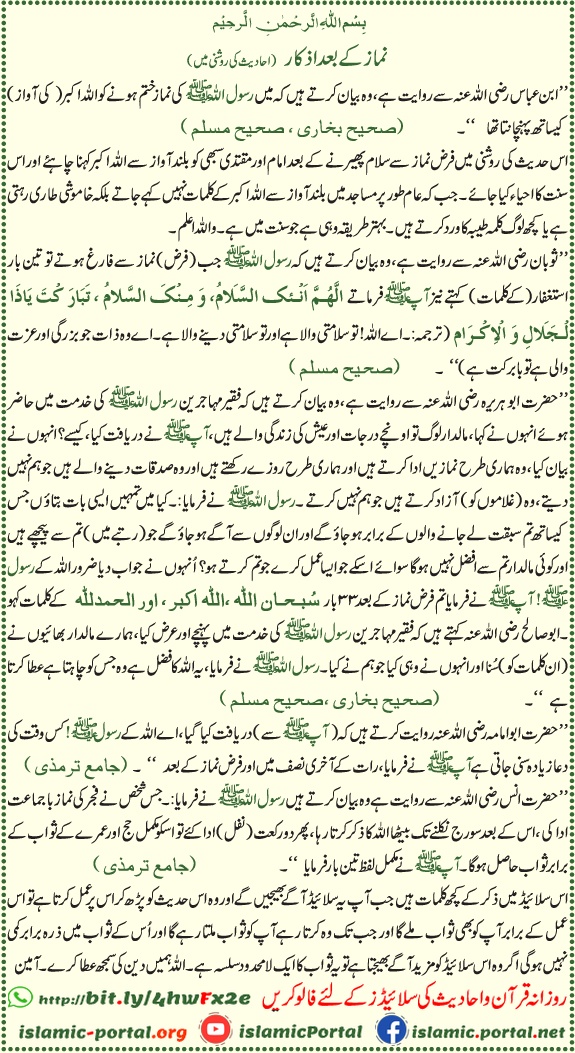
نماز کے بعد اذکار (احادیث کی روشنی میں)
اس حدیث کی روشنی میں فرض نماز سے سلام پھیرنے کے بعد امام اور مقتدی سبھی کو بلند آواز سے اللہ اکبر کہنا چاہئے اور اس سنت کا احیاء کیا جائے۔ جب کہ عام طور پر مساجد میں بلند آواز سے اللہ اکبر کے کلمات نہیں کہے جاتے بلکہ خاموشی طاری رہتی ہے یا کچھ لوگ کلمہ طیبہ کا ورد کرتے ہیں۔ بہتر طریقہ وہی ہے جو سنت میں ہے۔ واللہ اعلم۔
-
”ثوبان رضی اللہ عنہ سے روایت ہے، وہ بیان کرتے ہیں کہ رسول اللہ ﷺ جب (فرض) نماز سے فارغ ہوتے تو تین بار استغفار (کے کلمات) کہتے نیز آپ ﷺ فرماتے اَللّٰهُمَّ اَنْتَ السَّلَامُ، وَ مِنْكَ السَّلَامُ، تَبَارَكْتَ يَاذَا الْجَلَالِ وَ الْاِكْرَام (ترجمہ:۔ اے اللہ! تو سلامتی والا ہے اور تو سلامتی دینے والا ہے۔ اے وہ ذات جو بزرگی اور عزت والی ہے تو بابرکت ہے)“ ۔ (صحیح مسلم)
-
”حضرت ابوہریرہ رضی اللہ عنہ سے روایت ہے، وہ بیان کرتے ہیں کہ فقیر مہاجرین رسول اللہ ﷺ کی خدمت میں حاضر ہوئے انہوں نے کہا، مالدار لوگ تو اونچے درجات اور عیش کی زندگی والے ہیں، آپ ﷺ نے دریافت کیا، کیسے؟ انہوں نے بیان کیا، وہ ہماری طرح نمازیں ادا کرتے ہیں اور ہماری طرح روزے رکھتے ہیں اور وہ صدقات دینے والے ہیں جو ہم نہیں دیتے، وہ (غلاموں کو) آزاد کرتے ہیں جو ہم نہیں کرتے۔ رسول اللہ ﷺ نے فرمایا:۔ کیا میں تمہیں ایسی بات بتاؤں جس کیساتھ تم سبقت لے جانے والوں کے برابر ہو جاؤ گے اور ان لوگوں سے آگے ہو جاؤ گے جو (رتبے میں) تم سے پیچھے ہیں اور کوئی مالدار تم سے افضل نہیں ہو گا سوائے اسکے جو ایسا عمل کرے جو تم کرتے ہو؟ اُنہوں نے جواب دیا ضرور اللہ کے رسول ﷺ ! آپ ﷺ نے فرمایا تم فرض نماز کے بعد ۳۳ بار سُبْحَانَ اللّٰهِ ، اَلْحَمْدُ لِلّٰهِ ، اور اَللّٰهُ اَكْبَر کے کلمات کہو۔ ابوصالح رضی اللہ عنہ کہتے ہیں کہ فقیر مہاجرین رسول اللہ ﷺ کی خدمت میں پہنچے اور عرض کیا، ہمارے مالدار بھائیوں نے (ان کلمات کو) سُنا اور انہوں نے وہی کیا جو ہم نے کیا۔ رسول اللہ ﷺ نے فرمایا، یہ اللہ کا فضل ہے وہ جس کو چاہتا ہے عطا کرتا ہے“ ۔ (صحیح بخاری ، صحیح مسلم)
-
”حضرت ابوامامہ رضی اللہ عنہ سے روایت ہے کہ (آپ ﷺ سے) دریافت کیا گیا، اے اللہ کے رسول ﷺ ! کس وقت کی دعا زیادہ سنی جاتی ہے آپ ﷺ نے فرمایا، رات کے آخری نصف میں اور فرض نماز کے بعد“ ۔ (جامع ترمذی)
-
”حضرت انس رضی اللہ عنہ سے روایت ہے وہ بیان کرتے ہیں رسول اللہ ﷺ نے فرمایا:۔ جس شخص نے فجر کی نماز باجماعت ادا کی، اس کے بعد سورج نکلنے تک بیٹھا اللہ کا ذکر کرتا رہا، پھر دو رکعت (نفل) ادا کئے تو اسکو مکمل حج اور عمرے کے ثواب کے برابر ثواب حاصل ہو گا۔ آپ ﷺ نے مکمل لفظ تین بار فرمایا“ ۔ (جامع ترمذی)
اس سلائیڈ میں ذکر کے کچھ کلمات ہیں جب آپ یہ سلائیڈ آگے بھیجیں گے اور وہ اس حدیث کو پڑھ کر اس پر عمل کرتا ہے تو اس عمل کے برابر آپ کو بھی ثواب ملے گا اور جب تک وہ کرتا رہے آپ کو ثواب ملتا رہے گا اور اُس کے ثواب میں ذرہ برابر کمی نہیں ہوگی اگر وہ اس سلائیڈ کو مزید آگے بھیجتا ہے تو یہ ثواب کا ایک لامحدود سلسلہ ہے۔ اللہ ہمیں دین کی سمجھ عطا کرے۔ آمین
English Translation
In the name of Allah, the Most Gracious, the Most Merciful
Remembrances After Prayer (In the Light of Ḥadīth)
Ibn ʿAbbās (may Allah be pleased with him) narrated that he would recognize the completion of the prayer of the Messenger of Allah ﷺ by the sound of “Allāhu Akbar.”
(Ṣaḥīḥ al-Bukhārī, Ṣaḥīḥ Muslim)
In light of this ḥadīth, after concluding the obligatory prayer with salām, both the imām and the followers should say “Allāhu Akbar” aloud and revive this sunnah. Generally, in many mosques, these words are not pronounced aloud; rather, silence prevails or some people engage in other litanies. The better method is that which is established in the sunnah. And Allah knows best.
Thawbān (may Allah be pleased with him) narrated that when the Messenger of Allah ﷺ completed the obligatory prayer, he would seek forgiveness three times and then say:
Allāhumma anta al-salāmu wa-minka al-salām, tabārakta yā dhā al-jalāli wa-al-ikrām
(O Allah, You are Peace, and from You comes peace. Blessed are You, O Possessor of Majesty and Honor.)
(Ṣaḥīḥ Muslim)
Abū Hurayrah (may Allah be pleased with him) narrated that the poor among the Muhājirīn came to the Messenger of Allah ﷺ and said: “The wealthy have attained high ranks and lasting comforts.” He asked: “How so?” They said: “They perform prayer as we perform prayer, and they fast as we fast; but they give in charity, which we cannot, and they free slaves, which we cannot.” The Messenger of Allah ﷺ said: “Shall I not tell you of something by which you will catch up with those who have surpassed you and excel those who come after you, and none will be superior to you except one who does as you do?” They replied: “Certainly, O Messenger of Allah.” He said: “After every obligatory prayer, say thirty-three times: Subḥāna Allāh, al-ḥamdu liLlāh, and Allāhu akbar.” Abū Ṣāliḥ (may Allah be pleased with him) said: The poor Muhājirīn returned to the Messenger of Allah ﷺ and said: “Our wealthy brothers heard what we did and they did the same.” The Messenger of Allah ﷺ said: “That is the فضل of Allah; He grants it to whom He wills.”
(Ṣaḥīḥ al-Bukhārī, Ṣaḥīḥ Muslim)
Abū Umāmah (may Allah be pleased with him) narrated that it was asked: “O Messenger of Allah ﷺ, at what time is supplication most readily answered?” He said: “In the last part of the night and after the obligatory prayers.”
(Jāmiʿ al-Tirmidhī)
Anas (may Allah be pleased with him) narrated that the Messenger of Allah ﷺ said: “Whoever performs the fajr prayer in congregation, then sits remembering Allah until the sun rises, and thereafter performs two rakʿahs, will have a reward equivalent to that of a complete ḥajj and ʿumrah.” He said “complete” three times.
(Jāmiʿ al-Tirmidhī)
This slide contains some words of remembrance. When you forward it and someone reads this ḥadīth and acts upon it, you will also receive a reward equal to that action, and as long as he continues to practice it, the reward will continue to be recorded for you, without any reduction in his reward. If he forwards this slide further, it becomes an ongoing chain of reward. May Allah grant us understanding of the religion. Āmīn.